Chocolate City’s gentrification and the trail of tears
August 5, 2012
Gentrification is destroying whole communities leaving lower income residents homeless and hopeless seemed to be Saturday’s message from the special screening of Chocolate City sponsored by Maximize Good at the Watha T. Daniel Public Library. A discussion with filmmaker Ellie Walton and DC residents followed. While the film was shot in 2003 almost a decade later the message is resonating with greater urgency. The documentary covers the displacement of over 400 families who lost their battle against forced displacement from the Arthur Capper/Carrollsburg public housing project in Washington, DC. Filmmaker Ellie Walton views Chocolate City as a call to action against nationwide gentrification and redevelopment programs. The film explores the impact of rapid gentrification in the area through the work of a local group of women working for justice in their neighborhood.
In 2001, DC received a $34.9 million Hope VI grant to redevelop the 23-acre Capper/Carrollsburg public housing project as a mixed-income community, with the 700 public housing units to be replaced one-for-one, along with 1,000-plus market-rate and workforce-rate rental and ownership units and 50 Section 8 ownership units. The project is scheduled to be completed this year.
The 400 displaced families were promised a one-to-one replacement of all demolished public housing units. That is, for every one family displaced they would be replaced with a unit in the new housing project. However residents later discovered lower income residents did not qualify. Income qualifications based on regional median income standard disqualified a majority of renters with few qualifying to buy. The average median household income inside the beltway is $90.
Hope VI requires mixed income residents meet an income threshold of 60% of the regional average median income. Many of the former residents were minimum wage earners and financially barred from returning. The reality is that mixed income does not include low income. The former residents soon found additional barriers to reentry including a vague rule that only residents in “good standing” would be allowed to return those without past felony convictions.
As the discussion progressed many spoke with concern about the unfairness of current policies with some telling of their own displacement. In the film examples were sited on how the loss of community and its support resulted in the death of older displaced residents. In the discussion a participant identified as Daniel born and raised in DC told of his being homeless and currently having wait listed 8 years for housing. Community activist Louise Thundercloud shared her personal fights with DC Council members characterizing the situation as “cultural genocide” and efforts by the moneyed establishment to destroy communities of color specifically Black and Latino.
One participant likened the situation to the West Bank Israeli settlements with the Palestinians being pushed off their homelands. The issue of affordable housing is not likely to go away. According to the Urban Institute the federal government provides housing assistance through rent subsidies, tax credits for building affordable housing, and block grants for affordable housing initiatives. But only about one of every four eligible households gets such aid. And subsidized housing is found disproportionately in distressed neighborhoods characterized by crime, poorly performing schools, and a lack of jobs.
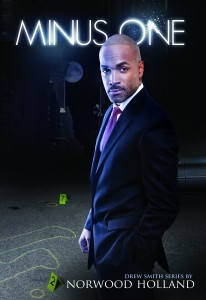
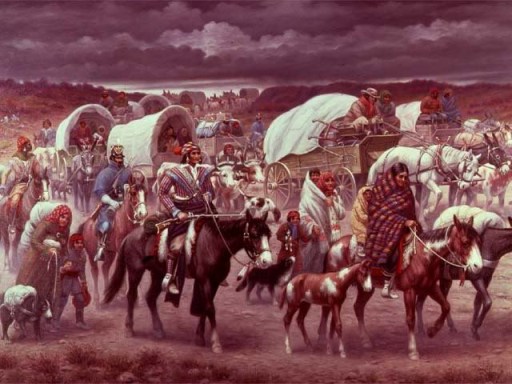
Low-income families are being forced out of their communities similar to the forced displacement of Native Americans in the 1830s. The history lesson remains the same. Misguided government policies are doing more harm than good and by inadequately addressing the problem only perpetuates the cycle and generations of inescapable poverty and disadvantage. Chocolate City as the filmmaker declares does indeed stand as a call to action.
Night Hawk an historical romance of substance
July 21, 2012
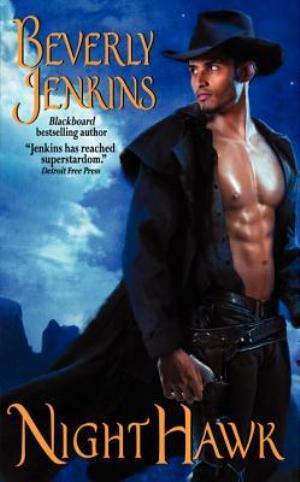 Beverly Jenkins’ Night Hawk is so evocative of deep emotions it seems she’s elevated the historical romance to a high art enhancing our understanding of American life during the 19th Century. Through her effective didactic story telling she immerses the reader back to another time. While the African American heritage primarily flows from the Middle Passage there are other neglected streams Jenkins mines like a gold panning prospector. She offers up a tale threading rich historical nuggets reflecting dark times of struggle and racial strife. People of color much like the larger society immigrated to the American shores from foreign lands in search of freedom and fortune and therein thrived despite racially sanctioned legal limitations.
So goes the story of Ian Vance Bigelow, a Scotsman and son of a Black man, and the equally compelling story of Maggie Freeman, the daughter of a Native American Kaw and a Black man. The spark of their romance and the light of their love make the vicarious experience of their journey worth following.
Night Hawk begins in 1889 two continents apart with Ian Vance Bigelow aka Preacher the gun toting bounty hunter turned U.S. Marshall returning to his homeland Scotland to visit his mother’s grave and there confronts his mother’s father. The wealthy grandfather delivers the mother’s dowry–festering guilt money. On Ian’s return journey traveling from Boston to his ranch in Wyoming by train and horse he finds himself burdened with escorting a prisoner. On a train stop in Dowd Kansas his path intersects with Maggie Freeman. Maggie, orphaned at an early age has been forced to eke out a living. In an attempted rape while working as a cook in a cat house she defends herself resulting in her attacker’s accidental death. Under arrest and to avoid a lynch mob the Sheriff attempts to move his prisoner to Kansas City when circumstances forced him to turn Maggie over to the U.S. Marshall, Ian Vance Bigelow, for delivery. From thereon to Cheyenne in a series of episodic adventures the two must overcome a series of obstacles including a budding romance.
Jenkins embeds accurate historical facts based on the established roots of real people into her stories paying homage to the diverse roots of the American people. Her lead characters are heroic, courageous, and far from stereotypical. exploring the struggles of African-Americans, Chinese-Americans, and Native Americans. The couples’ journey is skillfully woven with remarkable fidelity into the American historical tapestry. With some 30 books the award winning romance novelist Beverly Jenkins ranks among best, but as for the specific African American historical romance she is a pioneer at the absolute top, and with her vivid characters, intense love scenes and substantive themes it easy to see how she got there.
Mysticism in Latino Writing
November 20, 2011

The MLK Library presented a Saturday afternoon book discussion on Mysticism in Latino Writing featuring authors Lyn Di Iori and Dahlma Llanos Figeroa. The authors discussed the role of mysticism in their novels. Lyn Di Iori’s Outside the Bones and Dahlma Llanos-Figueroa’s Daughters of the Stone are both receiving rave reviews. Iori’s Outside the Bones is an erotically charged ghost story set in both present-day New York and Puerto Rico. Praised as her brilliant debut novel it takes a mesmerizing look at issues of race, class, power and greed with Afro-Caribbean witchcraft rituals deftly woven through a sixteen year mystery unraveling a woman’s disappearance.
 Figueroa’s Daughters of the Stone follows a sacred stone handed down five generations used to invoke mystical powers and rituals of the old ones. A rich sensual tale of mothers and daughters, love and sorrow, hardship and pride the novel through conjuring up the spirits renders a magical, deeply real, and vividly told story surrounding diasporic people.
Both authors of Puerto Rican descent have chosen to raise the voice of the American Latina, half of the nation’s largest growing ethnicity, a segment of our culture not often heard. The powers of the Santeria, a religious practice with its African origins and Catholic influences and Puerto Rican spiritualism lie at the heart of both novels. Highly talented both authors continue a renaissance of award winning Latina writers exposing an American experience so long overlooked.
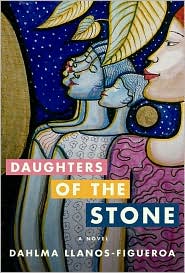
It has been said “Latina writers are powerful and seductive in their works. Their writings encompass the feelings women have in different situations, from dealing with a male-dominated society to family relationships.” No doubt the same can be said of the works of Iori and Dahlma. After readings the discussion ended with the interested patrons peppering the authors with questions about their themes, writing habits, and the Puerto Rican experience.
MLK Librarian Kathy Jenkins ended the program enthusiastically promising future similar author events. MLK Library and MahoganyBooks partnered in producing the program with the support of More Than Words (www.morethanwordsliterary.com) and Go On Girl! Book Club and Las Comadres.
Examining the Tea Party
October 28, 2010
The NAACP in collaboration with the Institute for Research & Education on Human Rights recently released its report exposing the Tea Party, its racism, antisemitism, xenophobia, islamophobia, nativism and its militia impulse. The various Tea Party factions (Freedom Works Tea Party, Tea Party Nation, 1776 Tea Party, ResistNet Tea Party, Tea Party Patriots, and The Tea Party Express) all make up an umbrella of spoke like organizations serving as radial limbs. At its core the central shaft comprises disaffected white leaders espousing racist ideas and advocating violence and many of whom are formally associated with white supremacist organizations. This well researched documented report is a sobering read.
The Tea Party is not a political party rather a movement that emerged through a series of locally and nationally coordinated protests in response to several Federal laws: the Emergency Economic Stabilization Act of 2008, the American Recovery and Reinvestment Act of 2009, and the health care reform bill. The movement’s primary concerns, leaders of the movement claim, are cutting back on the size of government, lowering taxes, reducing wasteful spending, and reducing the national debt and federal budget deficit.
“Take America Back” is the Tea Party mantra directed at the African American President and clearly meant to address the nation’s growing population of people of color: Latinos, Asians, and African Americans. Essence Magazine reveals what is meant in an article written by Gini Sikes, a white journalist, who was hired to go undercover and report on the 2010 convention of the Council of Conservative Citizens who kept their meetings secret from the media. “As a White journalist hired by Essence to tell this story, I’m able to mingle with them,” wrote Sikes. “I discovered they have widely varying agendas, but two things clearly unite the majority: unyielding loyalty to their race and a hatred for President Obama.”
The leaders have a hidden unspeakable agenda with goals directed toward the social realm. The movement claims not to be Republican, but embraces Republican political philosophy to which opportunistic Republicans attempted to control, advising Tea baggers to disrupt and essentially break up town-hall meetings. This attempt at capturing and channeling this new found energy, seems to have failed with the rise of little known Tea party candidates, Sharon Angle, Joe Miller, Christine O’Donnell and Rand Paul, upsetting the establishment in race after race only to later stumble because of their inexperience is delivering their extreme message and dealing with the media.
The Tea Party is like an escaped circus chimp reeking havoc and danger on to all around. The question is will the American electorate wise up and push back on this extremist movement? Voting is the only way to sedate the creature and put it back in its cage.
A Good Day
June 25, 2010
Sunday past was Fathers Day. Unlike many others my father is still with us and we’re still building memories. I’d like to share this one: 1956 I was five years old. The family piled into the car on a Sunday drive from Gum Springs into the District of Columbia to visit my maternal great grandparents. A pony ride operated at the intersection of Richmond Highway and Fort Hunt Road. Little kids were lined up giddy with anxious excitement. The idea of taking his three kids on a pony ride delighted my father, and he asked if we wanted to. My brother and sister spoke up willingly. I had reservations. My father parked and along with my mother we waited in the car and watched him approach the attendant. Moments later he returned and started the car. My mother asked what happened. He responded, the man said they didn’t allow niggers to ride their ponies. We drove off everyone in silent wonderment. I can’t tell you how relieved I was at not being mounted on a beast and paraded about the smelly stable grounds. Though I had a cowboy outfit, I never wanted to be a cowboy. Like I said, it was a good day to be a nigger –for me at least–not so for my father. Can you imagine the indignities our forefathers endured?
Stony the road we trod,
Bitter the chastening rod,
Felt in the days when hope unborn had died;
Yet with a steady beat,
Have not our weary feet
Come to the place for which our fathers sighed?
We have come over a way that with tears has been watered,
We have come, treading our path through the blood of the slaughtered,
Out from the gloomy past,
‘Til now we stand at last
Where the white gleam of our bright star is cast.

Sculpture: Lift Every Voice and Sing by August Savage, 1939