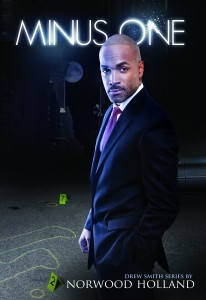
Poet and hip hop artist MV hits his mark
August 19, 2012
 Michael Victor Whatley, Jr., also known as MV, a rising poet, hip hop artist and playwright, was recently on the streets selling advanced copies of his self- published book of poetry Trying To Be Grown and caught the attention of Washington Post reporter Peter Hermann. Profiled as a curios oddity, an “out of the ghetto” success story, the Post headline touted Former D.C. rec-league star turns to poetry to escape urban neighborhood and crime. It is debatable whether MV’s biography represents an escape, moreover it’s a narrative illustrating a young man rising above environment discovering his talent and building upon it with self-reliance and discipline.
A DC native MV is a Speech and Theater major entering his senior year at Tennessee State University in Nashville. He is one of many fortunate young men who thrive despite the adversity and crippling influences associated with growing up in the inner city. Like most young men MV was drawn to sports hanging out at the Rosedale rec where he earned a reputation as an accomplished athlete. At the same he was developing another interest in the written word. He credits football with distracting him from being sucked into the street life and the neighborhood drug trade. Thanks to his aunt, grandmother and vigilant parental guidance that other interest ultimately held sway over his life and future.
At age 21 MV stands 5’7’, 125 pounds with a slight build, a brilliant smile, inquisitive eyes, and a gregarious and engaging personality all of which makes him more suitable for the stage than grid iron. While his brief biography may be of interest it is his growing body of compelling work that deserves more scrutiny. It reveals the essence of MV going about the business of an artist mastering his craft. He speaks of the influences of Mos Def who rose from hip hop to stage and screen and a particular affinity for the most notable and influential rapper Nas. MV’s book of poems Trying to Be Grown captures the experience of the young urban black male coming of age and undergoing the sometimes perilous transformation into manhood. He speaks of loneliness, love and lust while trying to find his place in the world. His poetic voice is tender and vulnerable at times introverted and deeply personal alternating to the outspoken and combative critical of the world around him.
Like poetry his music captures in form and feeling the hip hop genre’s elements of story-telling, subject matter, creativity, word play, metaphors, and delivery. At this stage in his development–a raw talent undergoing maturation he’s moving towards mastering the art form. While his work is sometimes punctuated with the raw underground qualities of the profane and the sexually explicit he is evolving toward a more artistic and sublime sound. That evolution is evidenced on his Youtube channel mikemvw21. Rhythmic hypnotic sounds abound on his new mixed tape titled Vol. 7. Pride scheduled to drop September 7th at Datpiff.com. Already a number of singles are generating buzz including Desperately Waiting, On my job, and Makes a song. Trying to Be Grown is also scheduled to become available on Amazon September 7th. MV has already attracted the attention of some major recording labels and hopes to break out in the near feature. Meanwhile his play The Good Die Young expects will be staged by a university troupe this academic year.
With entrepreneurial hustle MV is following in the foot steps and tradition of great Black poets like the young playwright and poet Langston Hughes who made his mark self-publishing and self peddling his works as well. MV is enthusiastically taking on the challenge of marketing and building a platform necessary for today’s digital market.
MV returned to his old neighborhood this summer greeted like a hometown celebrity by proud friends and family. And to hear him talk, his native Rosedale and DC are forever with him–having never escaped, but away only a sabbatical.
Chocolate City’s gentrification and the trail of tears
August 5, 2012
Gentrification is destroying whole communities leaving lower income residents homeless and hopeless seemed to be Saturday’s message from the special screening of Chocolate City sponsored by Maximize Good at the Watha T. Daniel Public Library. A discussion with filmmaker Ellie Walton and DC residents followed. While the film was shot in 2003 almost a decade later the message is resonating with greater urgency. The documentary covers the displacement of over 400 families who lost their battle against forced displacement from the Arthur Capper/Carrollsburg public housing project in Washington, DC. Filmmaker Ellie Walton views Chocolate City as a call to action against nationwide gentrification and redevelopment programs. The film explores the impact of rapid gentrification in the area through the work of a local group of women working for justice in their neighborhood.
In 2001, DC received a $34.9 million Hope VI grant to redevelop the 23-acre Capper/Carrollsburg public housing project as a mixed-income community, with the 700 public housing units to be replaced one-for-one, along with 1,000-plus market-rate and workforce-rate rental and ownership units and 50 Section 8 ownership units. The project is scheduled to be completed this year.
The 400 displaced families were promised a one-to-one replacement of all demolished public housing units. That is, for every one family displaced they would be replaced with a unit in the new housing project. However residents later discovered lower income residents did not qualify. Income qualifications based on regional median income standard disqualified a majority of renters with few qualifying to buy. The average median household income inside the beltway is $90.
Hope VI requires mixed income residents meet an income threshold of 60% of the regional average median income. Many of the former residents were minimum wage earners and financially barred from returning. The reality is that mixed income does not include low income. The former residents soon found additional barriers to reentry including a vague rule that only residents in “good standing” would be allowed to return those without past felony convictions.
As the discussion progressed many spoke with concern about the unfairness of current policies with some telling of their own displacement. In the film examples were sited on how the loss of community and its support resulted in the death of older displaced residents. In the discussion a participant identified as Daniel born and raised in DC told of his being homeless and currently having wait listed 8 years for housing. Community activist Louise Thundercloud shared her personal fights with DC Council members characterizing the situation as “cultural genocide” and efforts by the moneyed establishment to destroy communities of color specifically Black and Latino.
One participant likened the situation to the West Bank Israeli settlements with the Palestinians being pushed off their homelands. The issue of affordable housing is not likely to go away. According to the Urban Institute the federal government provides housing assistance through rent subsidies, tax credits for building affordable housing, and block grants for affordable housing initiatives. But only about one of every four eligible households gets such aid. And subsidized housing is found disproportionately in distressed neighborhoods characterized by crime, poorly performing schools, and a lack of jobs.
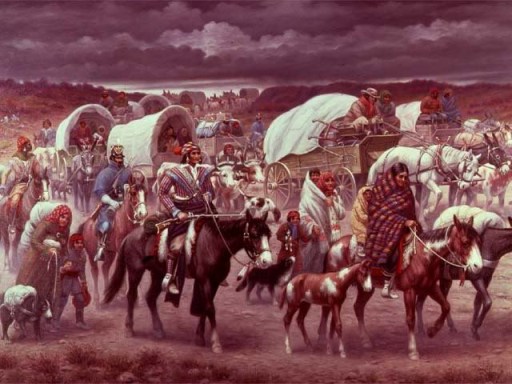
Low-income families are being forced out of their communities similar to the forced displacement of Native Americans in the 1830s. The history lesson remains the same. Misguided government policies are doing more harm than good and by inadequately addressing the problem only perpetuates the cycle and generations of inescapable poverty and disadvantage. Chocolate City as the filmmaker declares does indeed stand as a call to action.
Mark Duggan
August 19, 2011
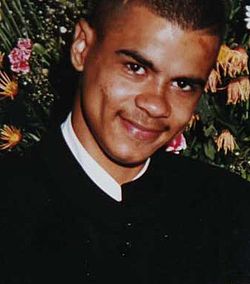 He was known as Starry Mark amongst his circle, but outside Tottenham London few had heard of Mark Duggan until August 4th when he died from a police inflicted gun shot wound. One witness reported the police shot Duggan at close range after they had pinned him to the ground. The investigation surrounding the shooting is being conducted by the Independent Police Complaints Commission (IPPC). Facts surrounding Duggan’s death remain murky. The 29 year old father of four was of mixed ancestry (British and Afro-Caribbean).
On August 6th Duggan’s relatives and local residents marched on the Totteham Police Station to demand information surrounding the circumstances of Duggan’s death. Some members of the crowd attacked two nearby police cars, setting them on fire. The incident sparked rioting across the city. Police officials later apologized for failing to provide information to the victim’s family in a timely manner and for providing the media with misleading information.
But for the police official’s failure to respond to family and public concerns the protest march and ensuing riot might not have occurred. In the aftermath the government’s swift crackdown and zero tolerance response under the guise of justice has been anything but with two people jailed for four years each for inciting riots on Facebook – riots that never took place – and one person sent to prison for six months for stealing $5 worth of water.
The British authorities are being criticized for its heavy handed reaction giving little attention to the causes behind the riots. Riots just don’t happen, but grow out a simmering discontent. Youth unemployment is the highest in 20 years. The British Office for National Statistics show the “inactive” population which comprises young people who are neither working nor unemployed stands at nearly 3 million, the highest level since the data was first collected in 1992. The analysis says two-thirds of these 16- to 24-year-olds are staying on in education, perhaps to stave off unemployment.
Compounding the problem in December British lawmakers pushed through a controversial hike in university tuition fees. Tens of thousands of angry students took to the streets of London and across the nation in protest arguing this effectively prices many out of a college education.
One wonders if similar signs of austerity and high youth unemployment in the States are likely with violent clashes signaling anti-establishment protests. In the 60s we saw African American communities destroyed by riots; many never recovered.
Austerity and riots take a heavy toll on the communities that can least afford them. Starry Mark wasn’t the cause of this riot but a human toll of global conditions.