
Launching the Drew Smith Series
August 5, 2010
I recently lauched a project in conjuction with Kickstarter.com to publish my novel Sleepless Nights. Check it out and reserve you copy now by pledging your support.
Sleepless Nights – A Kickstarter Project
A Good Day
June 25, 2010
Sunday past was Fathers Day. Unlike many others my father is still with us and we’re still building memories. I’d like to share this one: 1956 I was five years old. The family piled into the car on a Sunday drive from Gum Springs into the District of Columbia to visit my maternal great grandparents. A pony ride operated at the intersection of Richmond Highway and Fort Hunt Road. Little kids were lined up giddy with anxious excitement. The idea of taking his three kids on a pony ride delighted my father, and he asked if we wanted to. My brother and sister spoke up willingly. I had reservations. My father parked and along with my mother we waited in the car and watched him approach the attendant. Moments later he returned and started the car. My mother asked what happened. He responded, the man said they didn’t allow niggers to ride their ponies. We drove off everyone in silent wonderment. I can’t tell you how relieved I was at not being mounted on a beast and paraded about the smelly stable grounds. Though I had a cowboy outfit, I never wanted to be a cowboy. Like I said, it was a good day to be a nigger –for me at least–not so for my father. Can you imagine the indignities our forefathers endured?
Stony the road we trod,
Bitter the chastening rod,
Felt in the days when hope unborn had died;
Yet with a steady beat,
Have not our weary feet
Come to the place for which our fathers sighed?
We have come over a way that with tears has been watered,
We have come, treading our path through the blood of the slaughtered,
Out from the gloomy past,
‘Til now we stand at last
Where the white gleam of our bright star is cast.
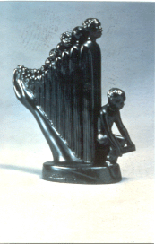
Sculpture: Lift Every Voice and Sing by August Savage, 1939
The Imperfect Model Minority
June 11, 2010
Driven by sustained immigration and refugee resettlement during the 1970’s and 1980’s, Asian Americans have emerged as the fastest growing racial group and labeled as the model minority. The label ballooned into a myth. Statistics are often cited to back up their model minority status such as high educational achievement, overrepresentation at Ivy League and other prestigious universities, and a high percentage of Asian Americans working in white collar professions (jobs such as medicine, investment banking, management consulting, finance, engineering, and law).
The term “model minority” was coined in the mid-1960s by William Petersen to describe Asians in comparison to African-Americans. Asian Americans were chosen as an example of a minority group who could succeed by “merit” alone without “affirmative action.” This assumption ignored completely each group’s American history and cultural mores. The first Asians came here as willing workers. Blacks were here dragged in chains.
Modelminority.com writes: “While superficially complimentary to Asian Americans, the real purpose and effect of this portrayal is to celebrate the status quo in race relations. First, by over-emphasizing Asian American success, it de-emphasizes the problems Asian Americans continue to face from racial discrimination in all areas of public and private life. Second, by misrepresenting Asian American success as proof that the US provides equal opportunities for those who conform and work hard, it excuses US society from careful scrutiny on issues of race in general, and on the persistence of racism against Asian Americans in particular.”
The problems of Asian Americans facing racism are detailed in Rosalind S. Chou and Joe R. Feagin’s book The Myth of the Model Minority. They too suffer from poverty, unemployment, discrimination and attendant mental health issues. Psychiatrists have long linked mental health and racial discrimination. Cho Seung-Hui’s 2007 Virginia Tech Massacre illustrates how the problems of Asian Americans can go undetected and untreated. Racism and discrimination are stressful events that adversely affect health and mental health. They place minorities at risk for mental disorders such as depression and anxiety.
In their important book Black Rage, psychiatrists Grier and Cobbs draw from records of patients to show that many psychological problems of African Americans are the result not only present-day discrimination but also of the accumulating impact of years of past discrimination. As they note, “a few black people may hide their scars, [but] most harbor the wounds of yesterday.” One advantage that African Americans have over many other Americans of color is many generations of building up a collective knowledge of white racism and of the strategies that enable people to resist it. In contrast, the collective memory of resistance strategies among Asian Americans seems relatively weaker and generally less effective in providing significant protection. (Chou and Feagin)
It’s not a perfect world and one can ill afford to ignore or underestimate the consequences of racism and discrimination as experienced by people of color.
Black Lives Have Less Value
June 9, 2010
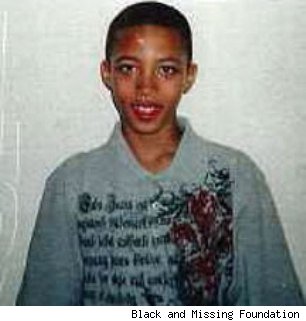 Anthony Thomas and Kyron Horman: Two Missing Boys Demonstrate Disparity in Coverage
It’s sad and unfortunate that two boys suddenly vanish without a trace. We ask ourselves a great many questions like who would do such a thing and why. Then there is the question why are greater resources brought to bear in the search for one over the other. Unfortunately, these are editorial decisions that reflect editorial values over community values. The unmistakable conclusion, Kyron Horman is white and has garnered national media attention while Anthony Thomas is black and has received neither local nor national media attention and that black life has less value.
Remembering Vincent Chin
June 7, 2010
Twenty eight years ago this month a hate crime galvanized the Asian American community. The killing of Vincent Chin and the subsequent trial of his killers heightened the awareness of discrimination and racism directed toward the Asian Pacific community. Chinese American Vincent Chin was having his bachelor party in a Detroit bar. Thinking he was Japanese two white who had recently been laid from Chrysler started a fight and beat Chinese several time with a bat leaving him brain dead. He died four days later. The judged fined the defendants $3,000 and ordered them to pay $780 in court fees.
At the time–and not unlike today–Michigan and its automotive industry were in a severe downturn. Ronald Ebens and Michael Nitz were involved in an altercation at the Fancy Pants in Highland Park where Vincent Chin was with three of his friends celebrating his bachelor party. During the altercation, Ebens reportedly said “because of you m—– f——, we’re out of work.” After both Ebens and Nitz, and Chin and his friends were bounced out of the Fancy Pants, Ebens and Nitz pursued Vincent Chin and his friend Jimmy Choi. They enlisted Jimmy Perry to find the “Chinese guys,” and caught up to Vincent on Woodward Avenue in front of McDonald’s Restaurant. While Nitz held Chin, Ebens beat Chin with a baseball bat. Two off-duty Highland Park Police officers saw the beating. Vincent Chin died on June 23, 1982 when he was disconnected from life support.
The Michigan Judge didn’t place much value on an Asian man’s life. The ruling seemed a throwback when Chinese, like Blacks and Indians, were not allowed to testify against whites in court. The case became a rallying point for the Detroit community, Journalist Helen Zia and lawyer Lisa Cheuk May Chin led the fight for federal Civil Rights charges. Only one of the accused was convicted and his charges were later overturned on appeal. However, a civil suit was brought on behalf of Chin’s mother awarding her a $1.5 million judgment which she has since had difficulty enforcing.
The case became a defining moment for civil rights advocacy in Asian Pacific American communities from coast to coast and helped spawn a number of Asian Pacific American organizations devoted to tracking and investigating hate crimes, including Asian American Citizens for Justice, the Committee Against Anti-Asian Violence in New York, the national Network Silence Coalition Against Anti-Asian Violence in San Francisco.
During times of economic distress immigrants often become targets of a few of the irrational majority. Today it’s common to read about hate crimes committed against minorities and Latino immigrants in particular. Vincent Chin should not be remembered just by the Asian community, but by all Americans. Vincent Chin’s death is a call to support all local and federal hate crimes legislation.