Poet and hip hop artist MV hits his mark
August 19, 2012
 Michael Victor Whatley, Jr., also known as MV, a rising poet, hip hop artist and playwright, was recently on the streets selling advanced copies of his self- published book of poetry Trying To Be Grown and caught the attention of Washington Post reporter Peter Hermann. Profiled as a curios oddity, an “out of the ghetto” success story, the Post headline touted Former D.C. rec-league star turns to poetry to escape urban neighborhood and crime. It is debatable whether MV’s biography represents an escape, moreover it’s a narrative illustrating a young man rising above environment discovering his talent and building upon it with self-reliance and discipline.
A DC native MV is a Speech and Theater major entering his senior year at Tennessee State University in Nashville. He is one of many fortunate young men who thrive despite the adversity and crippling influences associated with growing up in the inner city. Like most young men MV was drawn to sports hanging out at the Rosedale rec where he earned a reputation as an accomplished athlete. At the same he was developing another interest in the written word. He credits football with distracting him from being sucked into the street life and the neighborhood drug trade. Thanks to his aunt, grandmother and vigilant parental guidance that other interest ultimately held sway over his life and future.
At age 21 MV stands 5’7’, 125 pounds with a slight build, a brilliant smile, inquisitive eyes, and a gregarious and engaging personality all of which makes him more suitable for the stage than grid iron. While his brief biography may be of interest it is his growing body of compelling work that deserves more scrutiny. It reveals the essence of MV going about the business of an artist mastering his craft. He speaks of the influences of Mos Def who rose from hip hop to stage and screen and a particular affinity for the most notable and influential rapper Nas. MV’s book of poems Trying to Be Grown captures the experience of the young urban black male coming of age and undergoing the sometimes perilous transformation into manhood. He speaks of loneliness, love and lust while trying to find his place in the world. His poetic voice is tender and vulnerable at times introverted and deeply personal alternating to the outspoken and combative critical of the world around him.
Like poetry his music captures in form and feeling the hip hop genre’s elements of story-telling, subject matter, creativity, word play, metaphors, and delivery. At this stage in his development–a raw talent undergoing maturation he’s moving towards mastering the art form. While his work is sometimes punctuated with the raw underground qualities of the profane and the sexually explicit he is evolving toward a more artistic and sublime sound. That evolution is evidenced on his Youtube channel mikemvw21. Rhythmic hypnotic sounds abound on his new mixed tape titled Vol. 7. Pride scheduled to drop September 7th at Datpiff.com. Already a number of singles are generating buzz including Desperately Waiting, On my job, and Makes a song. Trying to Be Grown is also scheduled to become available on Amazon September 7th. MV has already attracted the attention of some major recording labels and hopes to break out in the near feature. Meanwhile his play The Good Die Young expects will be staged by a university troupe this academic year.
With entrepreneurial hustle MV is following in the foot steps and tradition of great Black poets like the young playwright and poet Langston Hughes who made his mark self-publishing and self peddling his works as well. MV is enthusiastically taking on the challenge of marketing and building a platform necessary for today’s digital market.
MV returned to his old neighborhood this summer greeted like a hometown celebrity by proud friends and family. And to hear him talk, his native Rosedale and DC are forever with him–having never escaped, but away only a sabbatical.
A Review of Seduced by a Stallion by Deborah Fletch Mello
August 9, 2012
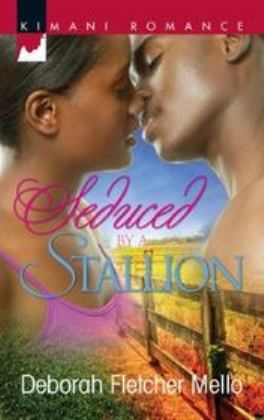 Romances are always fun to read because they are meant to entertain and satisfy. Those who enjoy vicariously experiencing the roller coaster emotions of falling in love will find satisfaction guaranteed in Deborah Fletcher Mello’s Seduced by a Stallion. Playboy Matthew Stallion the second oldest of the four billionaire Stallion brothers is a charismatic attorney, handsome and seemingly all too perfect especially in the eyes of Judge Katrina Broome a widowed mother. When her teenage son Collin steals and wrecks Matthew’s car the attorney agrees to mediation. Through Matthew’s negotiation Katrina agrees to place Collin in the Briscoe Ranch Mentoring Foundation program for at-risk youth of which Matthew sits on the Board. From that very first courtroom moment the couple’s mutual attraction is sparked and soon grows all consuming like an out of control wild fire.
Katrina in her mind attempts to dismiss her desires but her heart will not permit it. Matthew too copes with his own infatuation and so begins the slow rising romance with a first date, a private diner for two at Cowboy’s Stadium set at center field. “As they approached the center of the stadium, Katrina took in the immaculately set table …. adorned with an elegant white lace tablecloth, gold chargers, gold–trimmed china plates, gold utensil and crystal glasses. A tuxedoed waiter stood at attention.”
That over the top date pales compared to their Parisian excursion on the private Stallion jet. There in addition to their common profession they find their aesthetic sensibilities are in sync as well sharing their love for French Impressionism, Rodin and Camille Claudel. As wonderfully ideal and dreamy as it all seems, no romance is complete without conflict, and it comes in the form of Matthew’s “baby daddy drama” threatening to derail their happily ever after destiny.
Other titles in the series are (1) To Love A Stallion (John) (2) Tame A Stallion (Mark) (3) Lost In A Stallion (Luke) (4) Promises To A Stallion (Travis-a cousin). I understand there’s a Stallion sister waiting in the wings to make her debut.
I suspect there are many things the reader will find enjoyable with each brother’s romantic journey. Deborah Fletcher Mello’s major characters are all identifiably real and aching with desire. Her sublime language depicting intense love scenes may at times leave the reader breathless or at least forced to put it down to cool down. But be advised Seduced by a Stallion is a titillating tale you can’t put down for long.
Chocolate City’s gentrification and the trail of tears
August 5, 2012
Gentrification is destroying whole communities leaving lower income residents homeless and hopeless seemed to be Saturday’s message from the special screening of Chocolate City sponsored by Maximize Good at the Watha T. Daniel Public Library. A discussion with filmmaker Ellie Walton and DC residents followed. While the film was shot in 2003 almost a decade later the message is resonating with greater urgency. The documentary covers the displacement of over 400 families who lost their battle against forced displacement from the Arthur Capper/Carrollsburg public housing project in Washington, DC. Filmmaker Ellie Walton views Chocolate City as a call to action against nationwide gentrification and redevelopment programs. The film explores the impact of rapid gentrification in the area through the work of a local group of women working for justice in their neighborhood.
In 2001, DC received a $34.9 million Hope VI grant to redevelop the 23-acre Capper/Carrollsburg public housing project as a mixed-income community, with the 700 public housing units to be replaced one-for-one, along with 1,000-plus market-rate and workforce-rate rental and ownership units and 50 Section 8 ownership units. The project is scheduled to be completed this year.
The 400 displaced families were promised a one-to-one replacement of all demolished public housing units. That is, for every one family displaced they would be replaced with a unit in the new housing project. However residents later discovered lower income residents did not qualify. Income qualifications based on regional median income standard disqualified a majority of renters with few qualifying to buy. The average median household income inside the beltway is $90.
Hope VI requires mixed income residents meet an income threshold of 60% of the regional average median income. Many of the former residents were minimum wage earners and financially barred from returning. The reality is that mixed income does not include low income. The former residents soon found additional barriers to reentry including a vague rule that only residents in “good standing” would be allowed to return those without past felony convictions.
As the discussion progressed many spoke with concern about the unfairness of current policies with some telling of their own displacement. In the film examples were sited on how the loss of community and its support resulted in the death of older displaced residents. In the discussion a participant identified as Daniel born and raised in DC told of his being homeless and currently having wait listed 8 years for housing. Community activist Louise Thundercloud shared her personal fights with DC Council members characterizing the situation as “cultural genocide” and efforts by the moneyed establishment to destroy communities of color specifically Black and Latino.
One participant likened the situation to the West Bank Israeli settlements with the Palestinians being pushed off their homelands. The issue of affordable housing is not likely to go away. According to the Urban Institute the federal government provides housing assistance through rent subsidies, tax credits for building affordable housing, and block grants for affordable housing initiatives. But only about one of every four eligible households gets such aid. And subsidized housing is found disproportionately in distressed neighborhoods characterized by crime, poorly performing schools, and a lack of jobs.
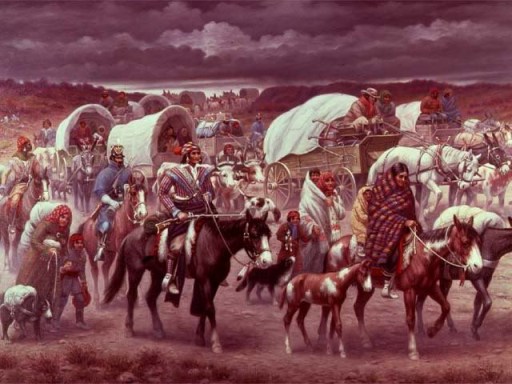
Low-income families are being forced out of their communities similar to the forced displacement of Native Americans in the 1830s. The history lesson remains the same. Misguided government policies are doing more harm than good and by inadequately addressing the problem only perpetuates the cycle and generations of inescapable poverty and disadvantage. Chocolate City as the filmmaker declares does indeed stand as a call to action.
Marcus Samuelsson regales crowd at the Smithsonian
July 29, 2012
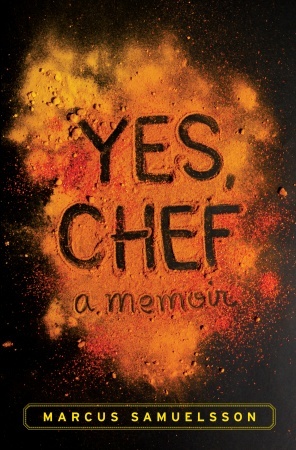 The Smithsonian’s National Museum of African Art’s second program in the Director’s Discussion Series featured Chef Marcus Samuelsson in a discussion of his memoir, Yes, Chef lead by Dr. Johnnetta Betsch Cole. The discussion was introduced by Michele Martin, host of NPR’s Tell Me More. Dr. Cole began by setting out the parameters of their talk addressing the Chef’s life, his work, his passion for food and his view of food as art.
Samuelsson has made his mark in the competitive restaurant world. He is an internationally acclaimed chef, philanthropist and a New York Times best-selling author. He is the youngest chef to achieve two three-star reviews from the New York Times and has been honored by the James Beard Foundation on multiple occasions, including “Rising Star Chef” (1999), “Best Chef: New York City” (2003), “Best International Cookbook” (2007) and “Best Television Program” (for Chopped in 2012). The author of several award-winning cookbooks, Samuelsson released his best-selling memoir, Yes, Chef, in June.
Speaking to a packed auditorium the celebrity chef recounted his remarkable journey of a tubercular three year old orphan and adopted by a Swedish couple. Born in Ethiopia, raised in Sweden, classically trained in Europe and landing in America where he fully embraces the African-American experience. Attributing his success to a combination of random luck, a work ethic and faith it was during those formative years his Swedish dad provided fundamental instruction necessarily acquired by successful people of color, i.e., your knife must be sharper than the others. As a man of color seeking opportunity and access he couldn’t settle on just being good but strive toward being the best.
The chef spoke on how to this day he sees himself more of a failed soccer player than an accomplished chef. While soccer may have been his first love he ultimately focused on the craft of cooking and for good cause rising up through the ranks of his chosen profession he tells of the stress of coping and overcoming countless challenges. Launching his career Samuelsson writes “I had to get to France, anyone who wanted to know greatness had to go to France. Yeah, I found French food too heavy and rigid and fussy sometimes, with technique overshadowing flavor, but there was no question that it embodied excellence, history, and craft—three qualities that appealed to me. Plus, I needed that pedigree in my pocket.”
Not only did he conquer France but took on other rigorous challenges including a cruise ship stint with no days off. With commitment, discipline, and fortitude he anchored in New York fulfilling a dream of his own restaurant in Harlem, the Red Rooster. Addressing the adoring crowd and much like his memoir Marcus Samuelsson was engaging, expressive and frank. He touched on such themes as eating with a spiritual compass, the significant narrative of Black cooks, and mystical Harlem. Inspired by the artists of the Harlem Renaissance the Chef spoke on the significance of the Red Rooster and how he approaches food as art.
Comparable to a moveable feast those in attendance left the evening’s conversation, book signing and reception feeling delightfully engaged and sated.
Night Hawk an historical romance of substance
July 21, 2012
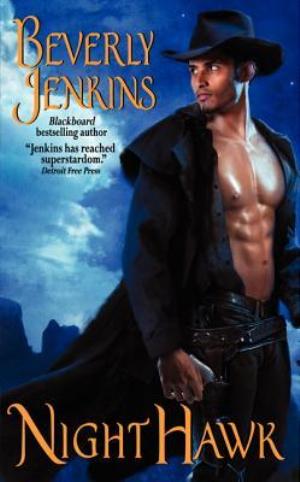 Beverly Jenkins’ Night Hawk is so evocative of deep emotions it seems she’s elevated the historical romance to a high art enhancing our understanding of American life during the 19th Century. Through her effective didactic story telling she immerses the reader back to another time. While the African American heritage primarily flows from the Middle Passage there are other neglected streams Jenkins mines like a gold panning prospector. She offers up a tale threading rich historical nuggets reflecting dark times of struggle and racial strife. People of color much like the larger society immigrated to the American shores from foreign lands in search of freedom and fortune and therein thrived despite racially sanctioned legal limitations.
So goes the story of Ian Vance Bigelow, a Scotsman and son of a Black man, and the equally compelling story of Maggie Freeman, the daughter of a Native American Kaw and a Black man. The spark of their romance and the light of their love make the vicarious experience of their journey worth following.
Night Hawk begins in 1889 two continents apart with Ian Vance Bigelow aka Preacher the gun toting bounty hunter turned U.S. Marshall returning to his homeland Scotland to visit his mother’s grave and there confronts his mother’s father. The wealthy grandfather delivers the mother’s dowry–festering guilt money. On Ian’s return journey traveling from Boston to his ranch in Wyoming by train and horse he finds himself burdened with escorting a prisoner. On a train stop in Dowd Kansas his path intersects with Maggie Freeman. Maggie, orphaned at an early age has been forced to eke out a living. In an attempted rape while working as a cook in a cat house she defends herself resulting in her attacker’s accidental death. Under arrest and to avoid a lynch mob the Sheriff attempts to move his prisoner to Kansas City when circumstances forced him to turn Maggie over to the U.S. Marshall, Ian Vance Bigelow, for delivery. From thereon to Cheyenne in a series of episodic adventures the two must overcome a series of obstacles including a budding romance.
Jenkins embeds accurate historical facts based on the established roots of real people into her stories paying homage to the diverse roots of the American people. Her lead characters are heroic, courageous, and far from stereotypical. exploring the struggles of African-Americans, Chinese-Americans, and Native Americans. The couples’ journey is skillfully woven with remarkable fidelity into the American historical tapestry. With some 30 books the award winning romance novelist Beverly Jenkins ranks among best, but as for the specific African American historical romance she is a pioneer at the absolute top, and with her vivid characters, intense love scenes and substantive themes it easy to see how she got there.