Seeking A Twitter Breakthrough
September 26, 2011
I’ve been waiting for a Twitter breakthrough when suddenly it all becomes crystal clear this Tweeting phenomenon. I opened a Twitter account three years ago. It lay fallow for the first two years. I would occasionally log in watch the Tweets and wonder why? The endless mundane comments surrounding the minutia of people’s ordinary uninteresting everyday lives all seemed like a waste of my time.
Obviously a generational thing as a Boomer the Millennial fad amounted to nothing more than nonsense. I had the same sentiments toward Facebook but that proved me wrong so I was willing to give it a chance. Facebook’s value revealed it power and purpose when I began to reconnect while my college pals and enjoyed the ability to correspond on a daily basis. Social Media had not impressed me until I attended a writer’s conference three years and heard the buzz about Social Media. It could help build your writer’s platform and your brand.
The Facebook breakthrough came early on. I soon launched a Kickstarter project to cover printing cost of my first novel. Facebook proved to be an incredible tool in attracting donors. Now the challenge becomes is to use Twitter to help develop a readership. Facebook offers greater advantages interacting with friends who have profiles and pictures aiding relationship building without the 140 character limitation. Twitter profiles are often vague, blank, or indistinct. You know very little about your followers.
I was befuddled as to how to build relationships and how Twitter would enhance my writer’s platform. Then about a year ago things began to change as I started to recognize relationships. I began to make a conscious effort and discovered the more time I was logged in, the more I observed and participated the more followers I attracted. The problem is finding your niche interest and followers with whom I had common interest. With a mere 200 followers I’m not there yet. I think its like swimming you just have to wade in and practice until you learn how to stay afloat.
I came to recognize the value of Twitter when it brought me face to face with a celebrity actor author whom I had admired and followed. Recently he tweeted he was doing a book signing at the Convention Center downtown. This was an opportunity I acted on immediately and came away thinking, wow, if only I could get people to come to my book signings on a moments notice that would be a breakthrough.
I have a twofold Twitter goal for the next year, (1) to build relationships with followers that will help promote my books, and (2) implement business and marketing strategies to get results. I will monitor my progress in terms of following and followers pursuing that breakthrough. Currently with 196 followers and 489 in a years time I hope to report the milestone and progress in pursuit of that breakthrough. Not only will I be staying afloat but doing laps.
The Colored Section of Bookstores
September 20, 2011

by Yolanda M. Johnson-Bryant the founder and CEO of Bryant Consulting. Her consulting firm provides a variety of services to new and established writers, including ghost writing, manuscript editing, character development, and marketing. See YolandaMJohnson.com
and LiteraryWonders.com
African-Americans have come a long way in the literary industry. More and more black authors are emerging onto the markets, be in via traditional publishing or self-publishing. This is good news to our authors and readers, but we have to admit—we have a long way to go.
As authors, we have made our mark in bookstores. Let me correct that—non African-American bookstores. Now, when a patron walks into a bookstore such as Borders, Barnes and Noble or even Wal-mart, a reader can find our section with ease; the “colored section” if you will.
No, this is not about race—not necessarily. This is more so about activism. Should our books have their own section in bookstores? Yes and no. A consumer should be able to walk into a bookstore and browse bookshelves by genre like they can any other book. By doing so, would close yet another notch in the belt of segregation.
However, the reality is that a lot of African-American authors would lose out if this was to happen; right now at least. Currently, when a reader learns of a new book by their favorite author, or a new author, it is so easy for them to head straight to the “colored section” to find the book they are looking for, and even then, there is no guarantee the book will be available.
Another frustrating factor of the “colored section” is the lack of variety of our books and the lack of quantity. Many bookstores may confine AA (African-American) books to one kiosk, or at best, a two-sided book shelf or corral. I often wonder how African-Americans would feel if this section was larger. Would we complain about the segregation of our books then? Perhaps so; but I get the feeling that there would be less complaints about the section, and more complaints about something else.
Could it be that African-Americans cringe at the thought of actually having to socialize amongst the proper folk and subject themselves to something outside of their comfort zone? This could be it, or perhaps another factor could be that we don’t want to take the time that it would take to saunter somewhere other than the “colored section” to find the book we are searching for. I’d say that all of the above might be true.
Earlier, I mentioned that this was not a matter of race but activism. Bookstores don’t get a free pass when it comes to the part they play in the “colored section” because they are guilty, guilty, guilty! Contemplate this: Just like we made our presence known in the literary industry, we can also make our presence known in bookstores and make our voices heard. Everywhere you look, there is a campaign for this or a campaign for that. Why not start a campaign to either make the “colored section” larger and with more variety or mixing our titles amongst the “house books” if you will.
Talk to your local bookstore managers and associates, write letters, start a Facebook page—something other than Like Me if You Like My Farmville Page. Let’s also hold publishers accountable for joining forces with authors and readers so we can do something about that little violation problem in bookstores. African-Americans will boycott a local restaurant because they didn’t have catfish on the menu, but won’t boycott a bookstore so that our books will have a better presence in their establishment.
By doing this, we challenge our readers to come in from the cotton fields and mingle in the country club, and at the same time, expanding our horizons. As African-Americans, we can no longer sit about and complain about things and do nothing about them. With the takeover of e-books and the closing of bookstores, our books will be diluted in the process. Take action or kindly put up your Baptist finger and excuse yourself.
Mark Duggan
August 19, 2011
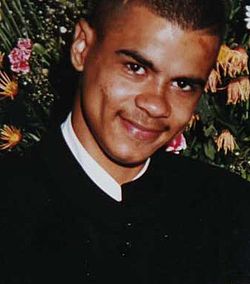 He was known as Starry Mark amongst his circle, but outside Tottenham London few had heard of Mark Duggan until August 4th when he died from a police inflicted gun shot wound. One witness reported the police shot Duggan at close range after they had pinned him to the ground. The investigation surrounding the shooting is being conducted by the Independent Police Complaints Commission (IPPC). Facts surrounding Duggan’s death remain murky. The 29 year old father of four was of mixed ancestry (British and Afro-Caribbean).
On August 6th Duggan’s relatives and local residents marched on the Totteham Police Station to demand information surrounding the circumstances of Duggan’s death. Some members of the crowd attacked two nearby police cars, setting them on fire. The incident sparked rioting across the city. Police officials later apologized for failing to provide information to the victim’s family in a timely manner and for providing the media with misleading information.
But for the police official’s failure to respond to family and public concerns the protest march and ensuing riot might not have occurred. In the aftermath the government’s swift crackdown and zero tolerance response under the guise of justice has been anything but with two people jailed for four years each for inciting riots on Facebook – riots that never took place – and one person sent to prison for six months for stealing $5 worth of water.
The British authorities are being criticized for its heavy handed reaction giving little attention to the causes behind the riots. Riots just don’t happen, but grow out a simmering discontent. Youth unemployment is the highest in 20 years. The British Office for National Statistics show the “inactive” population which comprises young people who are neither working nor unemployed stands at nearly 3 million, the highest level since the data was first collected in 1992. The analysis says two-thirds of these 16- to 24-year-olds are staying on in education, perhaps to stave off unemployment.
Compounding the problem in December British lawmakers pushed through a controversial hike in university tuition fees. Tens of thousands of angry students took to the streets of London and across the nation in protest arguing this effectively prices many out of a college education.
One wonders if similar signs of austerity and high youth unemployment in the States are likely with violent clashes signaling anti-establishment protests. In the 60s we saw African American communities destroyed by riots; many never recovered.
Austerity and riots take a heavy toll on the communities that can least afford them. Starry Mark wasn’t the cause of this riot but a human toll of global conditions.
On Boycotting The Help
August 10, 2011
 There are grumblings of a boycott of the motion picture to be released this week. A number of African American writers and readers are in awe and miffed by the success of Kathryn Stockett’s The Help; miffed because a white author tells an essentially African American story from a black perspective using a black voice. They are in awe because the book achieved an author’s dream of success with a best seller and an accompanying movie deal, but there is more, a back-story for which the author is being rewarded with a law suit.
The plaintiff Ablene Cooper, a 60 year-old woman who as recent as February worked for the Stocketts as a maid, Ms. Cooper argues that one of the book’s principal characters, Aibileen Clark is an unpermitted appropriation of her name and image, which she finds emotionally distressing. Cooper alleges Stockett promised not to use her name and likeness. How much Cooper contributed to the overall story remains unclear. There is legal precedence for Cooper’s claims.
Set in Jackson Mississippi the narrator Skeeter a white female journalism graduate relies on the maids’ housekeeping skills and knowledge to land a job as the newspaper’s housekeeping columnist, a subject of which she knows nothing. Talk about art imitating life, there are far too many similarities between the principal character, Aibileen Clark and Ablene Cooper right down to the gold tooth and the death of a child.
Whites taking and profiting from the stories and music of black folks misrepresenting their source and authorship has been a long standing practice. We recently discovered how Alan Lomax appropriated research of Black scholar John W Work, Lomax’s conduit to pioneering blues artists like Muddy Waters and Son House. Joel Chandler Harris profited from his Uncle Remus stories collected from Southern Blacks. Not to mention how young Elvis Presley sneaked into black churches and honky-tonks immersing himself into the sounds and rhythms he would later grow to imitate. There are hundreds if not thousands of stories of how African-American artistic expression has been misappropriated for the benefits of whites.
Given the negative evaluations of black culture and community coming from the larger white-dominated society this seems to be a part of our legacy where there is white privilege and limited opportunities for disadvantaged minorities to tell their own stories.
My only criticism is Stockett’s initial use of dialect which the author seems to abandon as her story progresses. Having spent some time in Jackson Mississippi I never noticed such dialect. Overall, I believe it is an important story that should be told. And the motion picture does provide opportunities for African American actors. I’m reminded of Hattie McDaniel’s declaration “I’ve rather play a maid than be one.” We take the bitter with the sweet. I wish the author well with lucrative rights and royalties and Ms. Cooper an even bigger settlement.
As for our cultural contributions I’m hopeful for the day when African-American writers and filmmakers in greater numbers will dazzle audiences with our remarkable stories.
I read The Help but won’t be in any theatre lines–not intentionally boycotting just waiting for the Netflix delivery.
Hawking Dreams: A Review of John Locke’s How I Sold 1 Million Ebooks in 5 Months
August 5, 2011
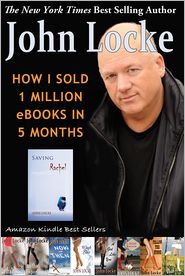 I finished How I Sold 1 Million eBooks in 5 Months feeling like I ate a full meal but yet left still hungry. My appetite unsatisfied I expected more though Locke delivered what he promised simply to tell his story. The best selling self-published author is the first to sell one million ebooks on Amazon. While it was not a single book but a crime series and a western title it nevertheless remains a major feat. With a two point business plan he offers sound advice more appropriate for the neophyte writer with dreams of making a mint selling ebooks. His advice is no different from dozens of other “How to for Dummies” books. Locke never claimed to teach successful internet marketing though he does rely on the three much touted tools of social media, Facebook, Twitter and a blog.
There is no secret formula. Locke is well trained in sales and marketing. His success came through trial and error recognizing what works and what doesn’t and building a solid marketing plan. Either by luck or happenstance he had the good fortune of writing a blog entry that went viral. That plus other efforts produced strong name recognition.
The key is to keep ’em coming back, and the way to do that is by mastering the four P’s of Marketing: Product, Price, Placement, and Promotion. (1) Have a good solid Product (a good book); (2) Placement or distribution, having your product ready and easily available; (3) the Price must be competitive giving true value; and (4) developing an effective advertising and Promotional strategy.
None of this is easy and requires much work. A best seller boils down to a good book, getting the word out, and developing a strong following. Locke admits he’s not a great writer but he does know how to appeal to the lowest common denominator with low prices.
At least that’s how I see it–and now after writing this review with some thought and perspective my meal digested and I’m feeling sated.