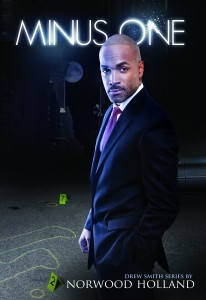
A Review of Reasonable Facsimile by Chris Shella
January 19, 2012
 Chris Shella’s Reasonable Facsimile is a tale of woe and redemption. Jasper Davis, a.k.a. J.D.–or Jack Daniels nicknamed in honor of his favored libation– is a dynamic skilled defense attorney with lots of baggage battling demons alcohol and sex. J.D. is as dirty as the clients he represents seemingly familiar with all low life Baltimore. When court is in recess other lawyers bone up on their cases while Jack Daniels is boning up on lap dances. One wonders how he even manages to function given the excesses of his hedonistic lifestyle, but it serves to fill the void in his life, his absent wife and son. Infidelity caused his wife a college professor to kick him to the curb. There he flounders in the gutter for 7 years. He pines over the past longing to return to the days before daily habits overtook his desire to be a father and husband.
J.D. takes on a major violent first-degree murder case and finds himself challenged by the judge, the prosecutor, the witnesses, his addictions, and a sinking reputation all of which get the best of him. But a turning point comes when federal agents suspect he conspired with his client to kill the key witness, a government informant. J.D. has a come to Jesus conversion realizing its life or death and the only way to save his self is to get back home with his wife and child. To complicate it all Carmen an attorney from his past appears and wants to take on the task of salvaging his life.
Reasonable Facsimile is at times humorous and shocking. The characters seem real and familiar. Chris Shella makes effective use of the stream of consciousness technique taking the reader on a tour witnessing through Jasper’s eyes the drunken binges and hangovers, the strip joints, and courtroom drama rich with the minutia of lawyering and legal procedures.
Reasonable Facsimile is a great read despite some editorial weakness. I was disappointed expecting a legal thriller as one reviewer mistakenly touted. That sub-genre usually features an attorney or judge as the hero, caught up in a gripping courtroom drama with numerous plot twists. A legal thriller it is not, but rather a story of the redemptive self transforming suffering into a positive emotional state moving from pain and peril to redemption. Despicable Jasper Davis is transformed from the ignoble to the noble and admirable. With structural flaws Reasonable Facsimile is not a page turner. Nevertheless it is a fulfilling read. I hope for more from Attorney Shella and with the right developmental editing he should have no problem knocking a real legal thriller out of the park.
A Review of Strangers in the Streets by Mitch Credle
December 29, 2011
 DC Homicide Detective Mitch Credle’s novel Strangers in the Street is one gritty real read, a journey into reality chocked with thugs, gangsters and rogue cops. From boys to men we follow Smokey and Black, a.k.a. Daniel Slade and Ricky Walker, one thoughtful and deliberative, the other impetuous and reckless. They bond as adolescents growing up in the rough section of Clifton Terrace spending their days hanging out, selling drugs, and committing street robberies. A crap game takes a turn for the worse and gunplay decides their future. Black takes a murder rap for Smokey and serves a juvenile life sentence. While Black is locked up until he’s twenty one, Smokey moves to the suburbs growing up in a relatively charmed existence. One becomes a hardened killer, the other a cop and years later their paths reunite and reignites their tender mutual affection. Theirs is a friendship illustrating how our past forever remains with us as constant as the loves of our lives.
Credle takes the writer’s adage “write what you know” to heart, leading the reader on a journey into the heads and hearts of vulnerable young men born into an environment where they are groomed and nurtured in the street life. Love plays a pivotal role and a redeeming force in both their lives. A determined father succeeds in removing Smokey from the ghetto life while Black hardened by time served returns to his uncle’s drug dealing enterprise. He resumes the street life killing and robbing until he falls in love with April, a good woman. Love gives Black’s life purpose but at this point it’s too late. The master of his fate not even April’s nor Smokey’s brotherly love can save him.
Strangers in the Streets is a good read despite eschewing the standard dialog format it nevertheless flows. Few writers are able to capture the depth, breadth and reality of street life as experienced by the young African American male with its distinct language and code of conduct. Mitch Credle does it well because he’s been there growing up on the streets of D.C. and rising up to a Homicide Detective with the Metropolitan Police Department.
Strangers in the Streets is a suspenseful read with actual empathy for the villain Ricky Walker otherwise known as Black. The book leaves the reader a sense of hope. Indeed, there is hope for the young men imprisoned and those queuing up to take their place. That hope can only be manifested by changing the environmental forces that shape their lives.
It is said, men are the products of their environments, some rise above it, many do not. It’s certain by changing their bleak environment we can raise the hopes of many.
Mysticism in Latino Writing
November 20, 2011

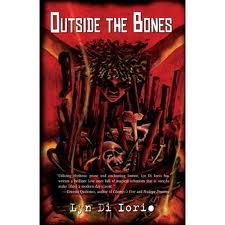
The MLK Library presented a Saturday afternoon book discussion on Mysticism in Latino Writing featuring authors Lyn Di Iori and Dahlma Llanos Figeroa. The authors discussed the role of mysticism in their novels. Lyn Di Iori’s Outside the Bones and Dahlma Llanos-Figueroa’s Daughters of the Stone are both receiving rave reviews. Iori’s Outside the Bones is an erotically charged ghost story set in both present-day New York and Puerto Rico. Praised as her brilliant debut novel it takes a mesmerizing look at issues of race, class, power and greed with Afro-Caribbean witchcraft rituals deftly woven through a sixteen year mystery unraveling a woman’s disappearance.
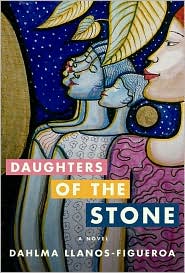
 Figueroa’s Daughters of the Stone follows a sacred stone handed down five generations used to invoke mystical powers and rituals of the old ones. A rich sensual tale of mothers and daughters, love and sorrow, hardship and pride the novel through conjuring up the spirits renders a magical, deeply real, and vividly told story surrounding diasporic people.
Both authors of Puerto Rican descent have chosen to raise the voice of the American Latina, half of the nation’s largest growing ethnicity, a segment of our culture not often heard. The powers of the Santeria, a religious practice with its African origins and Catholic influences and Puerto Rican spiritualism lie at the heart of both novels. Highly talented both authors continue a renaissance of award winning Latina writers exposing an American experience so long overlooked.
It has been said “Latina writers are powerful and seductive in their works. Their writings encompass the feelings women have in different situations, from dealing with a male-dominated society to family relationships.” No doubt the same can be said of the works of Iori and Dahlma. After readings the discussion ended with the interested patrons peppering the authors with questions about their themes, writing habits, and the Puerto Rican experience.
MLK Librarian Kathy Jenkins ended the program enthusiastically promising future similar author events. MLK Library and MahoganyBooks partnered in producing the program with the support of More Than Words (www.morethanwordsliterary.com) and Go On Girl! Book Club and Las Comadres.
Perfect Peace by Daniel Black
November 6, 2011
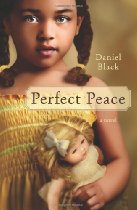
Reading Perfect Peace by Daniel Black words like intense, satisfying, funny, shocking, heart-rending and tragic help describe the gamut of emotions bubbling up from its pages. Never before have I read such a brotherly drama that tugs at the human heart. The author’s style is reminiscent of Tony Morrison’s early works with its folk lore quality and distinguishing contemporary realism. Anyone raised in a rural southern environment during the mid 20th century would have no problem relating to the setting of this Arkansas black community.
The story opens during the Spring of 1940 with the birth of Gus and Emma Jean Peace’s seventh son. Emma Jean’s long awaited desire and hope for a daughter are dashed but only momentarily. She resorts to blackmailing the mid-wife into silence then presents the child name Perfect to her husband and six sons as a girl and manages to carry out the masquerade for more than a half dozen years. We all know that Walter Scott’s quote “Oh what a tangle web we weave when we practice to deceive.” A calamity unfolds more intense than any Tennessee Williams psychological drama.
Probing themes like nurture vs. nature, the ignorance and superstitions associated with homophobia, and the generational consequences of parental cruelty. We follow Perfect’s growth and transformation from the perfect little girl to the confident man Paul along with the growth and development of his six brothers. It’s a journey of gratitude and forgiveness watching each child achieving success and a proper place in the world despite the parental missteps.
Daniel Black has done a superb job in the presenting these three dimensional characters as human and lovable despite their human flaws something required of every family. Thoroughly entertaining Perfect Peace is a great read I recommend it highly. 5 Stars
Book Review: How Could My Husband Be Gay by Ondrea L. Davis and J’son M. Lee
October 20, 2011
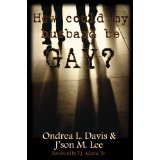 How Could My Husband Be Gay? is an autobiographical account of Ondrea L. Davis’ brief failed tumultuous marriage as penned by J’son M. Lee. There are three sides to every story, in this instant his, hers and the truth. Since this story presents only her side, the reader is forced to glean the truth from the facts given while questioning the authors’ motives for telling this deeply personal and painful story. This book is not intended to be a predictor of recognizable signs for determining or verifying suspicions of a gay husband. It is rather a moral tale of the consequences of deceit and deception.
In the beginning the wedding offers hopes of a bright and beautiful future despite troubling signs. The groom and his mother both attempt to upstage the bride on her day. The author paints a picture of a self centered husband controlled by his mother and leading a double life. Supposedly a devout Christian his duties as husband and father become secondary to his own desires. The reader is taken on a journey including a blissful honeymoon; establishing a household, child birth and growing financial woes. Except for the husband’s homosexual tendencies this story would appear common to many marriages where one becomes disinterested and consequently withdrawn from the family. The difference here is this man’s interest lay with other men.
He finally confesses his homosexual life after the termination a marriage that seems to have lasted less than five years but long enough to produce three children. The husband’s flawed character becomes manifest when he’s convicted of fraud in his employment. Both in his domestic and work life he appears prone to deceit. The books clearest message can be found in the next to last paragraph:
“If we cannot be honest with ourselves and the person we choose to marry, we can never be genuinely happy. This is virtually impossible because our entire existence with that person would be built on a foundation of deceit. It is grossly unfair to our potential spouse and any children that are born of that union. It takes a real man (or woman) to think ahead and choose not to be the source of anguish, stress and regret for another person.”
Ondrea Davis’ reliance on faith and pastoral counseling only delays the marriage’s ultimate demise. Many single parents, husbands and wives alike may identify with her heartbreak and the experience of an unfaithful spouse who abandons the marriage. The authors do a good job of giving expression to that experience and for that purpose its recommended reading. But moreover I suspect it’s about settling a score absent forgiveness. Such a practice is generally frowned upon as it distracts from message and loses credibility and for whatever pleasure it brings the writer it can only do more harm to the family. 4 Stars
Disclaimer: This information and review are the opinions of the individual reviewer. Black Literature Magazine cannot be held accountable. The reviewer takes full responsibility for the information and opinions presented.