Dead Dreams, Book 1by Emma Right
November 5, 2013
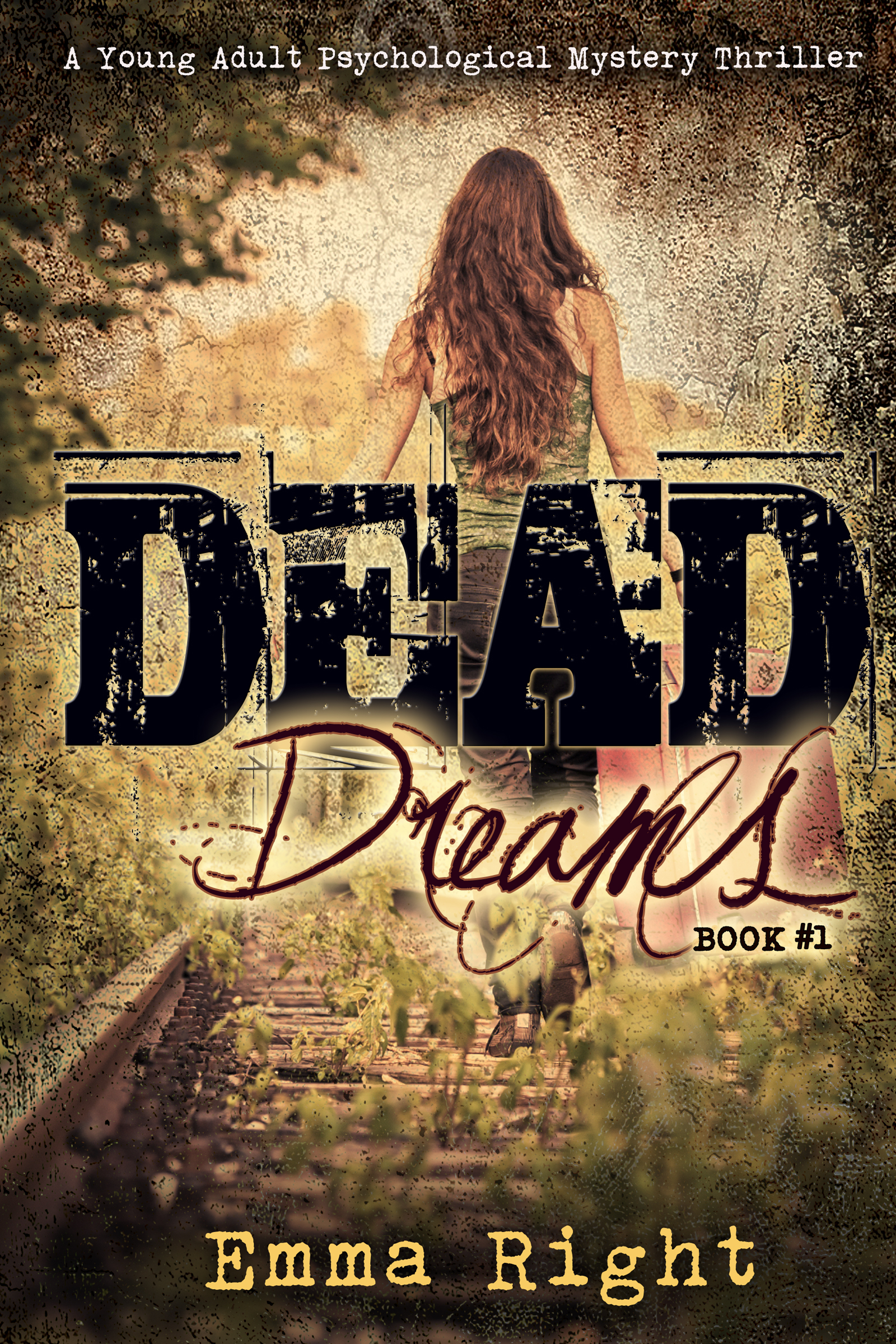 Genre: Young Adult
Book Title: Dead Dreams, Book 1, a young adult contemporary psychological thriller and mystery
Print Length: 170 pages
Publisher: Right House Books; 2013 First edition
(August 26, 2013)
Format: Kindle
ASIN: B00ESVEVBQ
Hosted by: WNL Virtual Book Tour: http://wnlbooktours.com/
About The Book:
Eighteen-year-old Brie O’Mara has so much going for her: a loving family in the sidelines, an heiress for a roommate, and dreams that might just come true. Big dreams–of going to acting school, finishing college and making a name for herself. She is about to be the envy of everyone she knew. What more could she hope for? Except her dreams are about to lead her down the road to nightmares. Nightmares that could turn into a deadly reality.
.
About The Author:
Emma Right is a happy wife and Christian homeschool mother of five living in the Pacific West Coast of the USA. Besides running a busy home, and looking after their five pets, which includes two cats, a bunny and a Long-haired dachshund, she also writes stories for her children. She loves the Lord and when she doesn’t have her nose in a book, she is telling her kids to get theirs in one.
Right worked as a copywriter for two major advertising agencies and won several awards, including the prestigious Clio Award for her ads, before she settled down to have children.
Social Links:
Email Address: emmarightmarketing@gmail.com
Website: http://www.emmaright.com
Twitter link @emmbeliever
Facebook link https://www.facebook.com/DeadDreamsEmmaRight
Goodreads User:
http://www.goodreads.com/book/show/18396455-dead-dreams
https://plus.google.com/u/0/111644513292318573575/posts
http://pinterest.com/emmaright/
https://twitter.com/emmbeliever
http://www.goodreads.com/author/show/7036571.Emma_Right
http://www.librarything.com/profile/emma.right.author
http://www.shelfari.com/emmaright
http://www.freado.com/users/35467/emma-right
Amazon author page: http://www.amazon.com/Emma-Right/e/B00BD7C4A8/ref=ntt_athr_dp_pel_pop_1
Buy Link: http://www.amazon.com/Dead-Dreams-Book-1-ebook/dp/B00ESVEVBQ/ref=sr_1_1?s=digital-text&ie=UTF8&qid=1380565365&sr=1-1&keywords=young+adult+thriller%2C+B00ESVEVBQ
Music Video: http://www.youtube.com/watch?v=uM7MI_3vqyo

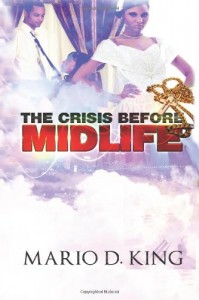
Mario King discusses his book The Crisis Before Midlife
October 31, 2013
[jwplayer config=”Custom Player” mediaid=”2133″]
What A Man Wants
I had the pleasure of meeting Mario D. King while he was promoting his debut novel at the Black Writers and Book Clubs Literacy Festival in Memphis, Tennessee. Mario was also honored for his community service to literacy. His novel The Crisis Before Midlife is a romance and while it has some flaws the author has done a commendable job as a male writer in the romance genre showing what a man wants in romance.
The protagonist a young man, Malcolm Turner is a teacher, an aspiring writer and a single parent. The Crisis Before Midlife is a romance chronicling his search for love. It’s often a given what the female protagonist wants, that perfect man, the perfect love, a home and a lasting relationship. And Malcolm Turner is no different. Malcolm an eligible bachelor has the same desires but too many distractions i.e. women and the remnants of too many failed relationships. So when Malcolm finds the one relationship he wants to work it gets derailed when an ex comes on the scene. The resulting assignation destroys his chance or does it? Malcolm has hopes and plans for the future and a young daughter who needs a mother.
There are few men writing romance literature though it is the most lucrative genre of all the contemporary books sold today. And there is a reason men don’t dominate in this field. It requires delving into deep emotional territory an experience men often find saccharin and sappy. Mario King has done a good job of showing what a man wants in a relationship and the challenges a man faces when woman find him irresistible. King captures his home town Memphis with vivid descriptions of local spots.
Authors like Mario are helping to take urban fiction to a higher level. This is a very good first book but I had some problems and they were all editorial. The first glaring warning came in the Author’s Note stating the book is a fictional novel, the classic faux pas of an untrained editor. Those in the know, know “fictional novel” is a no-no redundant term, all novels are fiction. Also some of author’s fashion descriptions and music are not organic to the scenes and often unnecessary and will date this book. I also thought the stylistic choice in diction could have been improved with a competent experienced editor.
Nevertheless kudos to Mario D. King. All in all it’s a good and interesting read though slow at times. It could have been better had he amped up the conflict. The few flaws I found could have been addressed by any good developmental editor. I look forward to Mario’s next book. I think he has a great potential and I like would like to follow his development. I give it 4 stars.
Living Separate Lives by Paulette Harper
October 23, 2013

Title: Living Separate Lives
Four Friends, One Secret and The Weekend That Changed Their Destiny
Author: Paulette Harper
Publisher: Thy Word Publishing
Genre: Christian Fiction, Novella
Hosted By: Write Now Literary Virtual Book Tour www.wnlbooktours.com
ISBN-13: 978-0-9899691-0-9
Releasing: Nov 5, 2013 e-book and paperback
About The Book
Candace Walker, Kaylan Smith, Jordan Tate, and Tiffany Thomas have their share of sorrows, but neither of them realizes how deep the sorrow goes. What happens when they agree to meet for a weekend of relaxation in beautiful Napa County? Which one will leave the same or worse?
For Candace Walker, life has left her battered and bruised. Kaylan Smith has struggled with prejudice from her in-laws. After fifteen years of marriage, bitterness is trying to raise its ugly head for Jordan Tate, whose husband wants to call it quits. And for Tiffany Thomas, dealing with rejection has never been one of her greatest feats.
Although they have been friends for years, they thought they knew each other well. But will a secret destroy their relationship and bring the sisterhood to a complete halt? Will they be able to forgive and allow God to mend that which might be torn?

About The Author
Paulette Harper is an award-winning and best-selling author. She is the owner of Write Now Literary Virtual Book Tours and is passionate about helping authors succeed in publishing and marketing their books. Paulette has been writing and publishing books since 2008. Paulette is the author of That Was Then, This is Now, Completely Whole and The Sanctuary. Her articles have appeared on-line and in print.
Social Media Links
Facebook : https://www.facebook.com/PauletteHarperAuthor
Twitter: https://twitter.com/#!/pauletteharper
LinkedIn: http://www.linkedin.com/pub/paulette-harper-johnson/7/a29/8a7
Pinterest : http://pinterest.com/pauletteharper/
Website: www.pauletteharper.com
Email: pharperjohnson@gmail.com
https://www.goodreads.com/book/show/18524878-living-separate-lives
Excerpt
“Stop preaching to me. I don’t want to hear it anymore. I’ve had enough of your self-righteousness.” The words continued to cut Jordan’s heart; words that she never heard before coming from the mouth of her husband, Eric. “You knew how I was before we got married.” His tone deepened with every word.
Standing in front of the sink, Jordan was frozen and motionless in the middle of the kitchen. She held the dish towel in one hand and a plate in the other. She turned and faced Eric, whose eyes were cold and hard. The verbal blows kept coming. Her mouth opened wide, but no words could be formed when he uttered the deadly words, “I want a divorce.”
Hosted by: WNL Virtual Book Tour: http://wnlbooktours.com
I Didn’t Know: A Conversation with Yvette Allen-Tatum
October 22, 2013
[jwplayer mediaid=”2099″]

[1]Children are suffering from a hidden epidemic of child abuse and neglect. Every year more than 3 million reports of child abuse are made in the United States involving more than 6 million children (a report can include multiple children). The United States has the worst record in the industrialized nation – losing five children every day due to abuse-related deaths. Factor in Child Sexual Abuse (CSA), 9.3% of all child abuse reports are for children who have been sexually abused.
[2]Here are some quick facts: (studies by David Finkelhor, Director of Crimes Against Children Research Center)
- 90% of sexually abused victims know their offenders;
- 1 in 5 girls and 1 in 20 boys fall victim to child sexual abuse;
- Self-reported studies show that 20% of adults females and 5-10% of adult males recall a childhood sexual assault or sexual abuse incident;
- During a one-year period in the United States, 16% of youth ages 14 to 17 had been sexually victimized; and
- Children are most vulnerable to child sexual abuse between the ages of 7 and 13.
In my new book, I Didn’t Know: Identifying, Confronting, and Overcoming Child Sexual Abuse I reference 8 myths about child abuse:
Myth # 1
Normal-appearing, well educated, middle-class people don’t molest children.
One of the public’s most dangerous assumptions is the belief that a person who both appears and acts normal could not be a child molester. Sex offenders are well aware of our propensity for making assumptions about private behavior from one’s public presentation. In fact, as recent reports of abuse by priests have shown, child molesters rely on our misassumptions to deliberately and carefully set and gain access to child victims.

Myth #2
People are too quick to believe an abuser is guilty, even if there is no supporting evidence.
In truth, people are too quick to believe that the accused is innocent, even if there is plenty of supporting evidence.
Myth #3
Child molesters molest indiscriminately.
Not everyone who comes in contact with a child molester will be abused. Although this finding may seem obvious, some interpret the fact that an abuser didn’t molest a particular child in their care to mean that those children who do allege abuse must be lying. In truth, sex offenders tend to carefully pick and set up their victims Thus while sex offenders may feel driven to molest children, they rarely do so indiscriminately or without a plan.
Myth #4
Children who are being abused would immediately tell their parents.
The fact victims often fail to disclose their abuse in a timely fashion is frequently used as evidence that an alleged victim’s story should be doubted. Research, however, shows that children who have been sexually assaulted often have considerable difficulty in revealing or discussing their abuse.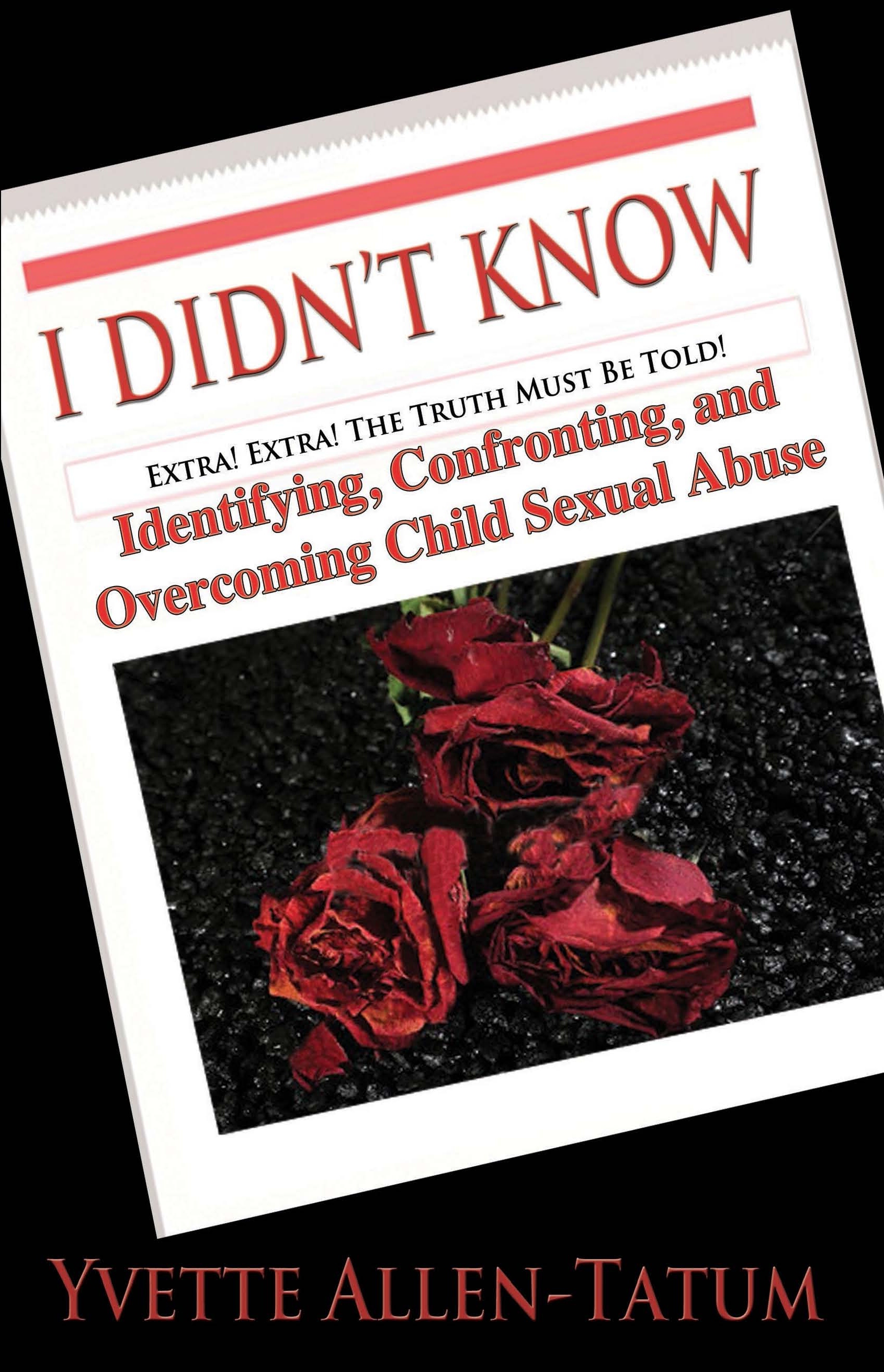
Myth #5
Children who are being abused will show physical evidence of abuse.
A lack of physical evidence of sexual assault is often cited as support that an alleged perpetrator must be innocent. However, research shows that abnormal genital findings are rare even in cases where the abuse has been proven. Some acts, like fondling and oral sex, leave no physical traces. Even injuries from penetration heal very quickly in young children and thus abnormal genital findings are not common, especially if the child is examined more than 48 hours after the abuse. In fact, even with proven penetration in up to 95% of cases, genital examinations will be essentially normal.
Myth #6
Hundreds of innocent men and women have been falsely accused and sent to prison for molesting children.
Over and over again, the media has raised the question whether America is in the midst of a hysterical overreaction to the perceived threat from pedophiles. Actual research, however, shows that, as a whole, our society continues to under-react and under-estimate the scope of the problem.
Myth #7
If asked about abuse, children tend to exaggerate and are prone to making false accusations.
Contrary to the popular misconception that children are prone to exaggerate sexual abuse, research shows that children often minimize and deny, rather than embellish what has happened to them.
Myth #8
By using repeated interviews, therapists or police can easily implant false memories and cause false accusations among children of any age.
Although research has consistently shown that children rarely confabulate about having been abused and false allegations have been found to be rare, the potential for false allegations continues to be an area of great concern in sex abuse cases.
I no longer refer to myself as a child abuse victim or a child abuse survivor. I am a child abuse thriver (term not in dictionary). In Hosea 4:6, it states (paraphrasing), “My people suffer for lack of knowledge.” As it relates to the subject of Child Sexual Abuse, the United States does not have a clear and accurate understanding of CSA. Why?
• Many do not know what Child Sexual Abuse is;
• Some think CSA is limited to penetration;
• People are uncomfortable talking about CSA; and
• Many reject the facts and choose to believe the myths.
In short, you cannot conquer what your will not confront. Therefore, it is imperative that we are able to Identify Child Sexual Abuse in order to Confront Child Sexual Abuse and thus, Overcome Child Sexual Abuse.
[1] U.S. Department of Health and Human Services, Administration for Children and Families, Administration on Children, Youth and Families, Children’s Bureau. (2012). Child Maltreatment 2011. Available from http://www.acf.hhs.gov/programs/cb/research-data-technology/statistics-research/child-maltreatment
[2]The National Center For Victims of Crime. (2012). Child Sexual Abuse Statistics. Available from http://www.victimsofcrime.org/media/reporting-on-child-sexual-abuse/child-sexual-abuse-statistics.
A Conversation with Valerie Lewis Coleman
September 16, 2013
[jwplayer mediaid=”2029″]

About The Forbidden Secrets of The Goody Box
What your father didn’t tell you and your mother didn’t know. Successful. Beautiful. Intelligent. Yet a satisfying relationship eludes Debra Hampton. At thirty-five years old, she can’t figure out why her philosophy on men-and what they want from women-isn’t working. She’s trapped in a cycle of shattered relationships, until a friend refers her to a relationship guru. After some resistance, Debra finds refuge in his counsel as he helps her navigate through the storms of rejection and failed love. Once he reveals the error of her ways, will Debra master the forbidden secrets to attract her soul mate or continue to keep love at bay?
About The Author

Valerie J. Lewis Coleman has helped women find relational fulfillment by identifying the four types of male hunters, avoiding seventy percent of men who only want the goody box and winning the heart of Mr. Right-For-You. She explains how she overcame struggles and offers proven techniques to help you get off the crazy cycle of relational demise in her novel The Forbidden Secrets of the Goody Box! Visit TheGoodyBoxBook.com for the sequel, prequel and upcoming events! The bestselling author of Blended Families An Anthology, Valerie has helped thousands of families navigate the challenges of child support, visitation, discipline and more. With over twenty years of experience in family and relationships, she has given advice on varying issues including baby-momma drama, defiant children and disapproving in-laws. On her journey to assist others with building strong families, she shares her testimony and provides practical tools to help you stop the stepfamily madness in your home!
Join her mailing list to be eligible to receive one free e-book. One winner will receive a special code to download a copy code to Smashwords.
http://www.thegoodyboxbook.com
http://www.penofthewriter.com/