
Victoria and Albert: Partners in the Age of Curiosity
December 29, 2025
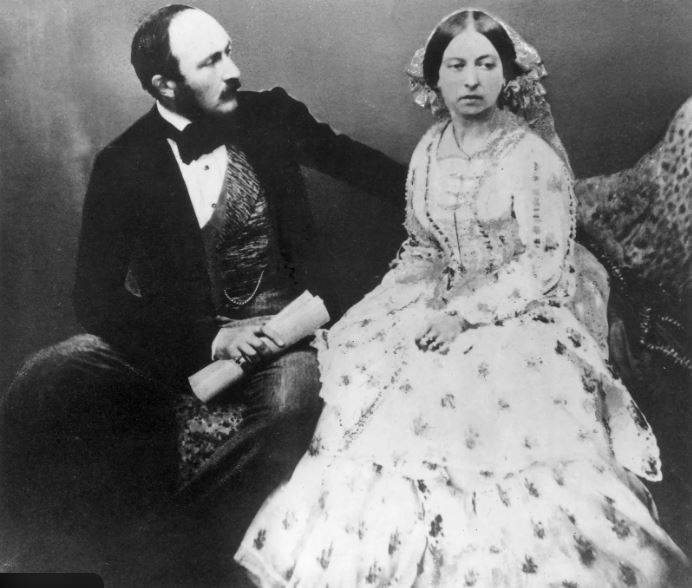
Victoria, the Masterpiece series now streaming on Netflix, sparked my curiosity about Prince Albert. What surprised me most was not Queen Victoria—whose force of will we already know—but the man who so often moderated her. On screen, he is portrayed as her “better half,” a phrase that never quite sat right with me. Curious, I wanted to know more about this man who was not better than Victoria, but very much her equal—and in some ways, ahead of his time in ways that still matter.
I began to see him differently: wrapped in a dark frock coat, stovepipe hat in hand, moving calmly through an age trembling with change. Steam engines. Factories. Iron rails slicing through countryside and custom alike. People feared machines would steal their work, their dignity, their place in the world. Sound familiar?
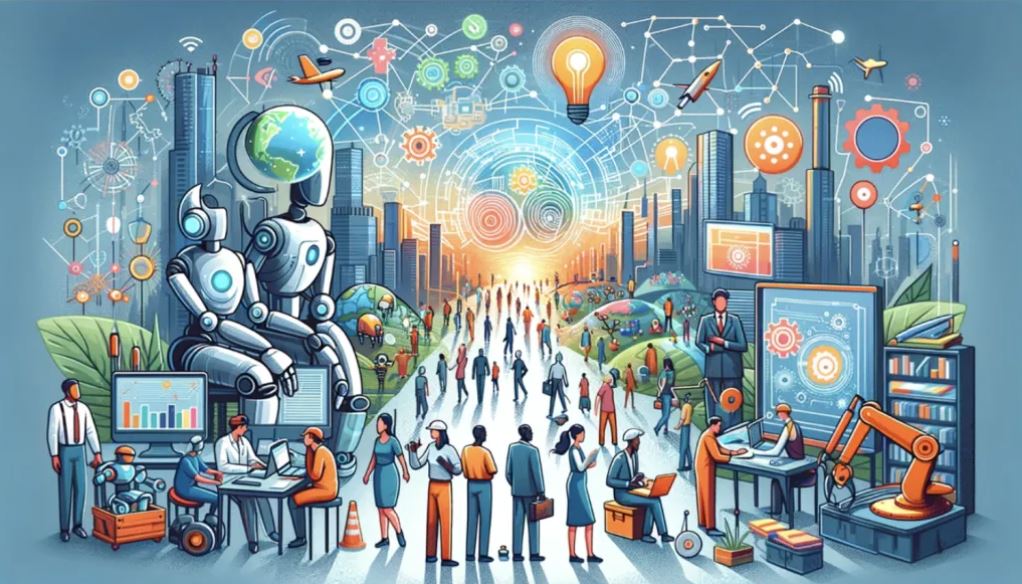
Albert understood something many of his contemporaries did not. The crisis of his age was not mechanical—it was psychological. Machines were forcing people to ask a dangerous question: If a machine can do what I do, what am I for? That question unsettled Victorian Britain just as artificial intelligence unsettles us today.
The Great Exhibition of 1851 was Albert’s answer. Not an answer carved in stone, but one built of glass and iron—transparent, ambitious, and unapologetically modern. He put invention on public display and called it progress, not to glorify machines, but to discipline fear with understanding. Curiosity, in his mind, was not idle wonder. It was civic responsibility.
The skeptics scoffed then, just as they do now. They warned of job loss, moral decay, and human redundancy. And yes—jobs disappeared. Skilled artisans were displaced. Old ways collapsed. But history did something inconvenient for the pessimists: it kept creating work. More work than before. New kinds of work. Work no one had words for yet.
Industrialization didn’t eliminate labor; it rearranged it. Engineers replaced blacksmiths. Clerks replaced scribes. Managers, inspectors, designers, teachers—all emerged because productivity increased demand and forced economies to expand. The real problem was never a lack of work. It was the failure to prepare people for transition.
That is the lesson we are refusing to learn again.
Artificial intelligence feels different because it reaches into the mind itself. If the Industrial Revolution mechanized muscle, AI mechanizes cognition. Writing, analyzing, predicting—once considered uniquely human—now shared. No wonder people panic. But when I look at history through Albert’s eyes, I see a pattern, not a prophecy of doom.
Twenty years from now, AI will not have erased human work. It will have redefined it. Routine cognitive labor will shrink, but roles requiring judgment, ethics, care, creativity, and accountability will expand. New professions will arise around governing, interpreting, and humanizing intelligent systems—just as factories once gave rise to modern management and public education.
Albert believed progress without moral architecture was dangerous. He insisted that education, ethics, and public understanding had to keep pace with invention. That conviction—quiet, principled, unfashionable—is what makes him feel so modern now.
So when I hear today’s debates about AI, I imagine Prince Albert adjusting his frock coat, stepping forward calmly, and reminding us: curiosity is not the enemy. Fear is. And history, if we’re willing to look it in the eye, has already shown us the way forward.