Surviving Cancer: keeping laughter and faith in high gear
November 27, 2012
Having never met Fred Evans face to face, I know we share one degree of separation. Beyond the fact he graduated from my beloved alma mater three months before I entered, reading his book I immediately felt a connection like the lifelong buddy down the street. That connection came personified and magnified in Surviving Cancer: Keeping Laughter and Faith in High Gear. Fred Evans chronicles his experience coping and overcoming a life threatening health crisis in a way so deeply personal and endearing, readers will find themselves laughing, crying, and comforted by his words.
It is a must read particularly for those facing similar circumstances, patients, caregivers and relatives. And let’s face it, few of us will go through this life without knowing someone who has or will battle the dreaded disease. In Fred’s case it was prostate cancer. Most men diagnosed with prostate cancer do not die from it, and in fact, more than 2.5 million men in the United States who have been diagnosed with prostate cancer at some point are still alive today.
However, the statistics among African American men are less favorable as they are more likely to be diagnosed at an advanced stage, and more than twice as likely to die of prostate cancer as white men. Prostate cancer occurs less often in Asian-American and Hispanic/Latino men than in non-Hispanic whites. The reasons for these racial and ethnic differences are not clear.
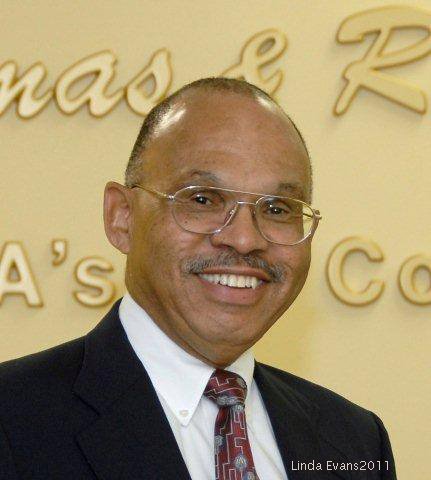 Fred Evans beat the odds. In his business career, Fred worked for 30 years in the financial division of Eli Lilly and Company, a global pharmaceutical company. For 15 of those years he served as a Department Head. During his career he worked on the corporate audit staff which included international audits in England, Spain, Switzerland, Venezuela, and Brazil. Additionally, he served as the Financial Analyst for Eli Lilly affiliates in Argentina and Chile. It is perhaps his avocation as an avid cyclist that brings him the greatest satisfaction. Much to his credit it also figured prominently in the battle providing a physical armor of stamina and strength necessary for fighting the disease as well as a support network sustaining his mind, body, and spirit.
The role of friends and family cannot be overestimated. Fred has the benefit of a loving caring wife, Linda, his once nursery school classmate, and high school as well as college sweetheart. He calls her his angel and she is right there beside him on every turn of the journey. Fred would endure the full cancer fighting strategy of surgery, chemotherapy, radiation and hormone therapy. There would be many physical challenges and side effects from uncontrollable hiccups, the chills, farting, and fatigue to peeing hot sauce. Fred, like a well conditioned warrior, soldiered through it all with an athletic endurance acquired through his cycling. His love of cycling plays a big part in his life. He served as a past President of the Central Indiana Bicycling Association having cycled over 170,000 miles.
Perhaps the greatest component of his journey and conquest is the state of grace that carries him through it all. Fred Evans shares the travails of his illness and recovery with ease and an incredible sense of faith and humor that makes this book an inspirational companion not just to those facing the battle but to their partners, friends, relatives, and lovers. The conversational tone is friendly and from the heart much like talking to a close friend—my buddy down the street. Surviving Cancer: Keeping Laughter and Faith in High Gear inspires so much hope and with five stars I recommend it highly.
Book clubs take on a dynamic function for independent publishers
October 23, 2012
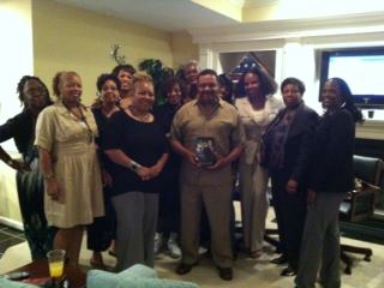
Norwood and the Classie Bookies Book Club
I recently attended The Reading Divas Black Authors and Readers Rock Weekend an event bringing together writers and book clubs. As a writer I had the opportunity to introduce myself and my works to hundreds of new readers. It was also an opportunity to network with other authors and share marketing strategies.The participating clubs came from both near and afar with snappy names like Just Us, Sugar and Spice, Nooks, Books and Friends, and Body and Soul. Book clubs are no longer just readers coming together to discuss popular literature, but now take on a more dynamic function within the publishing industry. The decline of brick and mortar bookstores, offering popular book signing venues where fans met their authors, are being alternatively replaced with the intimate book club setting serving as an increasingly important marketing and distribution channel.
The weekend began with a Friday night reception and open club meeting featuring a discussion led by Karen Quiones Miller of her new book An Angry Ass Black Woman and a reading by the popular legal thriller author Pamela Samuels Young from her new novel Attorney-Client Privilege. The program was standing room only as were the four Saturday morning workshops and panel discussions which included: Is Urban Lit Really Literature, So You Wanna Write, What Impact has the Ebook had on Black Publishing, and How to Start, Improve and Get the Most Out of Your Book Club. All in fun there were raffles for attendees and a fashion contest for the best dressed club. Select clubs paraded through the banquet hall donning identifying distinctive outfits from custom tops and scarves to cable stitch sweaters.
The event highlight came when keynote speaker New York Times best selling author Mary Malone took the floor sharing her remarkable writing journey entertaining her spellbound audience with her compelling biography. Her first novel, The Upper Room was published by St. Martin’s Press in 1985. She is best known for her novel, God Don’t Like Ugly (originally published by Dafina Books in the fall of 2000), and the series revolved around the characters first introduced in this book. Her latest is God Don’t Make No Mistakes.
Pamela Samuel Young told how through a book club appearance she landed a guest spot on the The Monique Show. Many authors appreciate that one on one face time with their readers many of whom do not hold back on their criticism. The authors and guest book club members frequently expressed how valuable they found the event praising the The Reading Divas. Many are looking forwarding to next year’s event expecting it be an even bigger and better event.
TaNIsha Webb author of The Ultimate Book Club Experience and founder the Book Club University is a great source for both authors and book clubs.
A review of The Master
September 23, 2012
Freddie Quell is a drunken sailor with a combat related stress disorder and a drinking problem played by Joaquin Phoenix. He returns from World War II after a stint in the South Pacific unable to hold down a steady job drifting on a course of self destruction. He washes up on a boat sailing from San Francisco to New York under the direction of Lancaster Dodd founder of the Cause a sci-fi cult doctrine espousing time travel back to former lives to cure current ills. The character Lancaster Dodd was inspired by and loosely modeled after Scientology founder L. Ron Hubbard. While The Master is supposedly Quells story Dodd’s equally compelling biography competes for top billing.
Dodd seems to believe he and Freddie Quell share a past and manages to endear himself to the misfit. While Quell is initially skeptical of the charismatic Dodd’s teachings he remains open and submits to a “Processing” a first step analyses. The Cause “process” is eerily similar the Scientology Dianetics, L Ron Hubbard’s belief that individuals can free themselves of mental disorders and phobias by facing the traumatic incidents or “engrams” that block one’s mind. Quell grows into a believer indeed a Dodd protector and bodyguard until the son Val Dodd (played by Jesse Plemons) exposes his father as a fraud. Dodd sets out to cure Quell of his alcoholism or perhaps more to brain wash in an attempt to gain complete submission to the Cause.
Freddie Quells passes time as a member of the cult family but his manner and actions come into frequent conflict with others. Quell’s loyalty to Dodd seems conflicted despite his violent defense of the crackpot. Wracked by the memories of a youthful romance Quell finally realizes Dodd is con-man and stages his escape from Dodd’s hold. He participates in a motorcycle game driving off into the Arizona sunset failing to return. Years later Dodd tracks Quell down from his newly established London school and beckons Quell to join him. Upon arrival Dodd as The Master demands Quell’s complete submission to the Cause. The film climaxes with two men competing free wills clashing before departing.
It’s a complex surreal tale with Quell’s sexual libido frequently surfacing. The cinematography, costumes and sets are superbly and amazingly authentic and true to the 1950s era.
The Master was written, directed, and co-produced by Paul Thomas Anderson. He has written and directed six feature films: Hard Eight (1996), Boogie Nights (1997), Magnolia (1999), Punch-Drunk Love (2002), and There Will Be Blood (2007). He has been nominated for five Academy Awards, There Will Be Blood for Best Achievement in Directing, Best Motion Picture of the Year, and Best Adapted Screenplay; Magnolia for Best Original Screenplay; and Boogie Nights for Best Original Screenplay. Anderson has been hailed as being “one of the most exciting talents to come along in years” and “among the supreme talents of today.” The Master had its premiere at the 69th Venice International Film Festival. Anderson compared Phoenix’s commitment to that of Daniel Day-Lewis for his level of concentration stating that Phoenix got into character and stayed there for three months.
This is the first film of 2012 receiving Oscar buzz due a large part to the Joaquin Phoenix and Philip Seymour Hoffman. Both may contend for Oscars as best actor and best supporting actor.
Romeney Keeps Digging
September 19, 2012
A conversation with Keith Thomas Walker
September 7, 2012
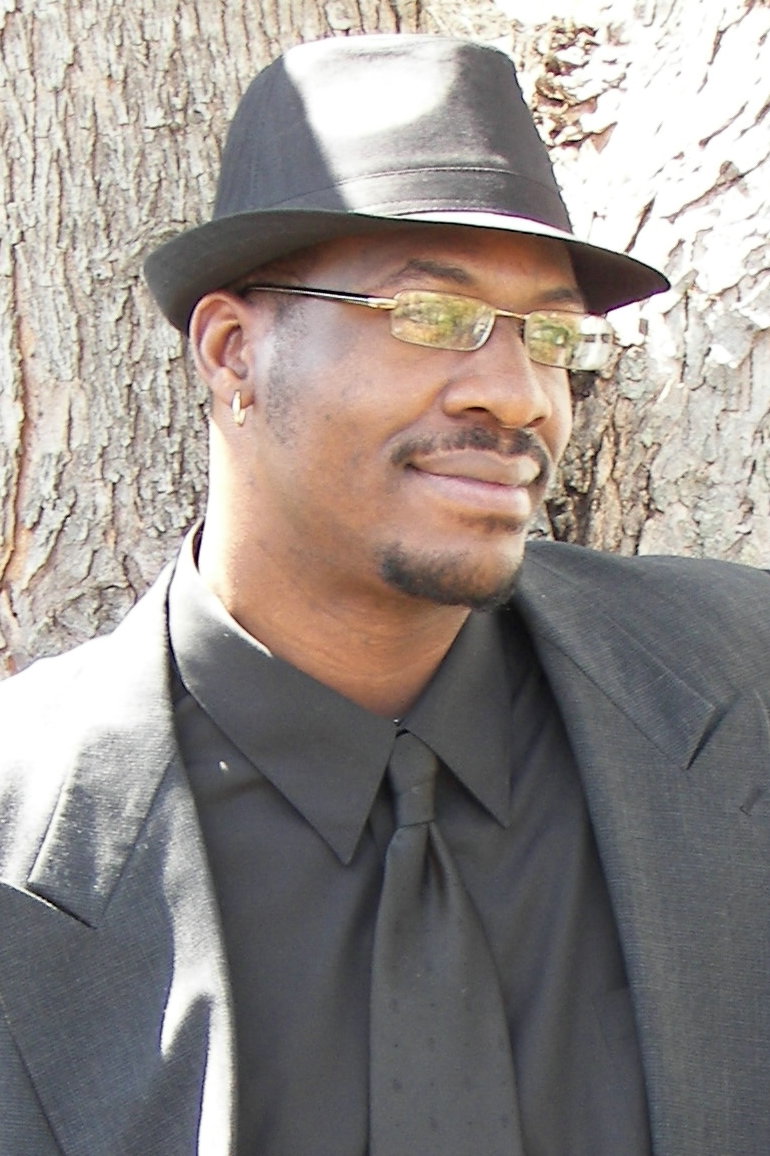
[You can listen to this interview by going to this link Keith Thomas Walker.]
Keith Thomas Walker works as a hospital administrator in Fort Worth. His coworkers were shocked to discover him moonlighting as a romance author. He’s married with two children and at last count Keith Thomas Walker has published 10 books. I emphasize published because he has a sizeable unpublished repertoire. He’s been writing since 4th grade with obviously life long aspirations for the written word. He currently writes romantic suspense and urban fiction. Keith Walker insists that he does not write street fiction which begs an explanation since urban fiction and street literature are often used synonymously. I read two of his latest books, Jewell and the Dapper Dan and Harlot. Both are phenomenal reads racking up 5 star reviews.
At the recent Romance Slam Jam, a gathering African American in Little Rock I noticed Keith was doing a very brisk business at his signing table, more than some of the older more established writes. I was curious about his popularity and reading his book it became clear. Keith Thomas Walker is a writer of exceptional talent. Keith thanks for joining me.
Keith Walker: Thanks for that awesome introduction.
Norwood: It’s nothing but the truth. Keith, give us a sense of what you write. I think the titles alone are very revealing. So give me a rundown of some of your books.
Keith Walker: The first book I wrote was Fixin’ Tyrone. That was a romance novel based on a guy named Tyrone, who was getting out of prison, and he wanted to re-establish a relationship with the mother of his children. It was written 100% from her perspective; her name is Mia, and she wanted absolutely nothing to do with Tyrone initially. Tyrone was pretty much the cause of a lot of troubles in her life, and he went to prison and left her with her child. She pretty much moved on from those types of individuals. So the title for that one comes into play with the idea of fixing a man — is it possible to fix a man? That was the overall theme of that book — could Mia help Tyrone become the man that she needed him to be — if she were to take him seriously to being with. I don’t want to spoil the ending.
Then I wrote, my second books was How To Kill Your Husband. That title is actually, it could go both ways — some women are excited to see it, and some women are actually turned off by it. They tell me, oh, I don’t want to kill my husband, and things like that. That’s a shame, because that’s an excellent book. It’s about a woman who’s been married for 16 years, and she suspects her husband is cheating on her. So she gets with her friends, because she has two great friends in the book, and they try to figure out the mystery, they do a lot of detective work. Her friends are what really drive the book, because they’re hilarious and they’re really in her corner. Again, I won’t spoil the ending if she kills her husband or not.
Norwood: Please make it clear that this is not a how-to book.
Keith Walker: No, it’s not a how-to book, and I think that’s what confuses some of the readers who are turned off by the title, because they think that I’m giving an instructional manual on how to go about killing your husband, when it’s not that type of story at all. It’s a really heartfelt story. It was marketed as a romance; but technically, it’s not a romance novel, although she does have another love interest in the story.
You know, I’ve written a lot of books: A Good Dude, Riding the Corporate Ladder, Blow by Blow, The Finley Sisters’ Oath of Romance, Jewell and the Dapper Dan. And Dripping Chocolate is coming in November.
Norwood: Okay. Dripping Chocolate is the one I’m waiting for. I want to go back a second. Are you independently published or are you under contract? I notice you market under the imprint Keith Walker Books.
Keith Walker: Well, my website is KeithWalkerBooks.com, and that’s been the website I had when I published my first book. My first six books, from Fixin’ Tyrone through Harlot were actually published by a publishing company, Genesis Press. After that sixth book, I learned a lot about the industry, and I felt I could take it on my own. So yeah, the rest of my books are published by Keith Walker Books, which is now a company and a publishing company. I print my own books, I do the whole nine yards.
Norwood: Great, it sounds like you’re doing well also.
Keith Walker: Jewell and the Dapper Dan was the first release from Keith Walker Books, and that was a book that my publisher wasn’t interested in because of the violent aspects to it. I always knew that that was a great book, because a lot of my readers who look at my rough drafts — that was one of their favorites. There was actually about half of them who considered that one their favorite. So I always knew Jewell and the Dapper Dan had to get published.
Norwood: Well, of the two I have read, Jewell and the Dapper Dan is my favorite.
Keith Walker: I loved it.
Norwood: I want to talk about Jewell, and I also want to talk about Shayla, who is the character in Harlot. I’m just amazed at how you draw these true-to-form women, and they’re clearly identifiable, they have strong characters; while, Jewell is more like a gangster moll, Shayla is like a preacher’s kid. Shayla kind of turns me off because I see her more as a misandrist. She impresses me as a woman who hates men and she uses men.
Keith Walker: Yeah, Shayla’s definitely an unlikeable character initially and pretty much throughout the book. Whether she gets redeemed at the end, I guess that’s up to the reader to decide. That’s a challenge writing about a character that not necessarily likeable for the reader, or someone the reader could possibly relate to; because Shayla has issues and they stem from her past being a preacher’s daughter, but also from the affair she witnessed her father having. So Shayla, she is misogynist. Well, is that the same for men and women?
Norwood: In hating the opposite sex, men are misogynists, and women are misandrists.
Keith Walker: Okay, well she has issues with men and she takes it out on quite a few of them. She feels like she’s got a vendetta against a particular type of men, in particular; yes, she goes through the whole book trying to destroy these men. From a man’s point of view, I can definitely see how that could be a troubling read.
Norwood: Yeah, she’s an evil character — unlike Jewell.
Keith Walker: That’s the thing, because Jewell is actually the worst of the two if you look at their lifestyle; but yet, Jewell’s a more likeable character.
Norwood: Yes, she’s the more evil one.
Keith Walker: Well, she didn’t want to be evil; but yeah, she did do a lot of evil things. She had that conflict. I think that was the thing that helped Jewell, because she really didn’t — towards the end after she had a revelation, she didn’t want to be the same person she was. She actually had that conversation with Daniel, that she didn’t want to be evil; and he said, that’s what we are — that didn’t sit right with her. Yeah, Jewell, she definitely had redeeming characteristics.
Norwood: So you write from a woman’s perspective with a woman’s voice.
Keith Walker: Generally. I do switch it up now and then. With Blow by Blow, I think it was mostly from the woman’s perspective; but the main character, he was a boxer, and I did a few scenes and chapters strictly from his perspective. And with Dripping Chocolate, it’s pretty much half and half. So I think, I’m not sure why, but as I progressed as a writer, I decided that more points of view would be a better thing.
Norwood: Well, I’m curious because your depictions are so faithful. I figured you must be a keen observer of women.
Keith Walker: That’s definitely the truth. I always, at all times — women, they’re just interesting creatures. When they walk in a room, they demand attention and respect. Me, I’m just going to observe her period. I always watch, and I always listen more than I talk. So yeah, I pick up on a lot.
Norwood: I thought that was very interesting. And having met you, and the first thing I noticed about you is that you sort of stand back, an observer, you’re very unassuming, which really surprised me when I started reading your book. I said, oh, well, there’s a lot going on in this dude’s head, you know?
Keith Walker: I get that work a lot, because I work at a hospital and I talk to a lot of people all the time. When I started reading, they were totally shocked at the fact that I was writing period, and also what they were reading because they never saw it in me. But I’m not one to go around boasting. I just play my part — listen, observe. When it comes time for me to interact with my readers, I really do shine when those moments come.
Norwood: Not only do you shine with your writers, but also you have two different personalities: There’s the guy who stands back and watches, and I picked up on your YouTube channel — you can be pretty silly.
Keith Walker: Yeah, I can be.
Norwood: Dancing with your mother, I saw that one. Then there’s one where you’re doing these thoughts. You’re not all serious business, there are a lot of different facets to your own personality.
Keith Walker: I would say for the most part, at least 80% of the time, I am serious business; but when that 20% comes, I let my hair down all the way. But for the most part, yeah, I am pretty serious.
Norwood: Okay. And you are a romance writer; what drew you to that genre? I mean, I know why I write in that genre, because to me, that’s where the money is.
Keith Walker: Right. Honestly, it wasn’t a decision I made initially, because when I first started writing, I just wanted to write urban fiction, and not street lit — definitely not street lit. Just the urban fiction book, kind of like Walter Mosley and Walter Dean Myers and people like that. But that stuff was hard to get out the door, and I’d only written one book, but I found it hard to publish it.
I started writing short stories after that, because urban fiction was the only thing I had written, so I wrote a series of short stories, just trying to broaden my horizons. One of the short stories I wrote was a romance story, and I let a lot of people read these stories, and the romance story was the one that drew the most attention. Quite a few people encouraged me to write a romance novel. Even though I’d never considered it, I wrote Fixin’ Tyrone, and it just took off from there. I sent it to publishers, and immediately they were wanting the book, so I knew I hit on something there.
But the thing I always stress is, even though I do write romance novels, there’s still a lot of things I want to say. I have a voice, and there’s a lot of social things I want to bring up. So I still found a way to bring these things into the romance novels. So I don’t feel like I’m compromising my goals because I’m still doing the things I want to do, but I’m also doing it within the parameters of a love story — but that works for me.
Norwood: Well, I do think you write with a message. But now I want to get to that point about street lit, and you say you don’t write street lit, but you do write urban fiction. Now, according to Wikipedia, those two are synonymous; but I there is a gradation between the meanings of the two.
Keith Walker: I have anything against street lit or writers who write street lit, I just don’t want to be put in that category. I guess the reasons for that would be the flaws that I find in street lit. It’s kind of a touchy subject, because if I go into this, it’ll come out — well, he doesn’t like street lit, and he doesn’t like street lit authors; but it’s not all of them, it’s just some of them.
Norwood: I see understand, and I would like to make clear — street lit and urban fiction are not synonymous. Street lit is usually — it lacks the quality that you find in urban writers. Street lit, it’s usually produced by an untrained writer.
Keith Walker: The thing with street lit is that, in my opinion, almost the majority of them don’t pay attention to certain things.
Norwood: Well, it glorifies the wrong things.
Keith Walker: It glorifies violence for sure, it glorious the sex. The sex isn’t romantic, it’s just sex. They don’t do a lot of character development, they don’t do a lot of plot. I mean, it’s just — here’s what I’ve rationalized it as, or here’s what I compare it to: Women are in a beauty shop, and one woman comes in and says, girl, you should come outside, this girl’s dragging this other girl down the street, she done slept with her baby mama, and they over here fighting, blah, blah, blah. Every woman in the beauty shop would obviously be interested in that, and most of them would go outside to see it. That’s kind of what street lit is — it’s interesting, there’s no doubt about it, and it’s violent and it’s vulgar. It’s all these things that automatically draws your attention, but it’s not necessarily good writing. That’s why I don’t want to be characterized as that.
Norwood: And that’s the point I wanted to clarify. It’s like the distance between reading the New York Daily Posts and the New York Times. I think street lit lacks in redeeming value.
Keith Walker: Yeah, it totally does.
Norwood: Okay. Let’s talk a little bit about your first book, Colored Rags, I read about in one interview that you have a very interesting story about that and how that led to your becoming published.
Keith Walker: Well, Colored Rags, the first time I wrote that book, I was in college. I graduated college in 2000, and I believe I wrote that two years before graduation, so I wrote that a long time ago. At the time, I was doing a lot of poetry — I was mainly a standup poet, I went to poetry slams, and I was really successful with it. But, poetry is one of those fields where you can’t really get published and make a living doing it. So I decided to go ahead and write books, because even before the poetry, I’d always written short stories and things of that nature. All through high school, I won so many contests for writing.
I decided to write my book, and I wrote it about the things I was familiar with, which at the time was bad neighborhood, hoodlums, gang violence, drugs, murders, all of that. So I wrote the book, Colored Rags, and it was about an individual — it was kind of mirroring things I’d went through. So it was about a kid that was basically just trying to go to college and be something; but the summer before college, he gets caught up in a lot of gang violence.
That book, I passed around to a lot of people — everyone loved it, but I couldn’t get it published. I can’t tell you how many rejection letters I got for it, and it hurt my feelings because I felt like it was a good book. I knew I was a good writer, but I couldn’t get anywhere with that book. So I don’t know, that depression kind of just — it just took on a depression toward writing in general, and I didn’t try to write another book or story for nine years, until I wrote Fixin’ Tyrone. It was a long time.
What I learned from that was I was making a mistake in thinking that just because publishers didn’t like this book, it didn’t mean necessarily that I couldn’t make it as a writer. It meant just what I said, publishers didn’t like this book. But when I started writing again, there was no way I was going to stop like I did before. So I wrote Fixin’ Tyrone; as soon as I sent it out, I started another book; as soon as I sent that one out, I started another book. I just got into this pattern of writing that was going to be totally opposite of what I did before.
In that first year I started writing again, I wrote four books; the year after that, I wrote five books; and the year after that, I wrote four again. So I was literally on a roll. A publisher’s only going to publish two books a year regardless of what you write, so that’s why I have feedback a lot of books. That’s why, now that I’m independent, I can put out four books a year easy, and I can do that for two years and not even write another book.
Norwood: Well, now you can focus on marketing and getting the word out there, because it seems to me that you’re probably more popular in your region in the South and on the west side of the nation.
Keith Walker: The popularity is a thing that I’m still struggling with. It’s like the readers who do read me, they’re very vocal about how much they appreciate and like the writing. But I haven’t reached the success — I haven’t had a best seller, but I’m still —
Norwood: Well, that was my next question and the suggestion that you go for the Essence Best Seller List. There’s a way they go about that.
Keith Walker: I’m thinking Dripping Chocolate‘s going to be the one, because Dripping Chocolate‘s my first full-fledged romance that I’m releasing under my own company. So this is almost a make it or break it type of deal — not that I’m going to wallow if it doesn’t make it, but I really think Dripping Chocolate‘s going to be the one.
Norwood: I tell you, the title just sounds intriguing.
Keith Walker: Oh yeah, the title’s irresistible. The thing about that is, this book is far less sexual than the title would make it sound. I’m not going to spread that word, because women want it to be highly sexual. But it’s a good book. It’s about a guy named Charles, he got out of prison, and got into stripping just as a means to go an end; he meets a woman who’s got children, and they have a serious love for each other; he’s trying to do right — so that’s where the conflict comes in.
Norwood: What I like about the image of your male characters, they’re always these tall, dark, handsome men who the women seem to fall for.
Keith Walker: Yeah, no offense to you, but those yellow boys — it’s time for the dark men like me to come.
Norwood: I know what you’re doing, and I applaud your efforts. So, Keith, tell me what’s up next? I think you’re currently promoting Harlot.
Keith Walker: I’m promoting Harlot, but I’m also promoting my short story collection, because that short story collection that I told you about is coming out in October. I’m having a contest where I’m going to allow anybody who wins to have their story published with mine. That’s going to be an e-book that I’m going to release for .99 cents. It’s 60,000 words, so that’s a full-fledged book, basically. So I’m going to release it for .99 cents, I’m still going to have the paperback. My short story collection is not romance, so that’s the only thing that may pull it down a little bit, but they’re great stories and it’s going to be a great price, so we’ll see how that works out.
After that, Dripping Chocolate.
Norwood: Okay, you heard it, folks, Dripping Chocolate, look for it. To learn more about Keith, you can look him up at: keithwalkerbooks.com. Is that right, Keith?
Keith Walker: Yeah. Everything is on that site.
Norwood: Keith. I wish we could go on. I really enjoyed talking to you. It’s been a pleasure. I haven’t quite finished Harlot yet.
Keith Walker: The ending is — you’ll like it.
Norwood: Right now Jewell is still my favorite. There you have it. Keith Thomas Walker. Thank you, Keith.
Keith Walker: Thanks for having me.