
The Cost of Silence: Fear Replaces Principle in Congress
October 3, 2025

Democracy does not collapse in one dramatic instant. It corrodes slowly, almost imperceptibly, under the weight of fear, cowardice, and the silence of those entrusted with its defense.
We now find ourselves in a political moment where the nation’s elected representatives appear unwilling to confront executive overreach. The president has clamped down on dissent, punished those who speak out, and wielded reprisals as tools of governance. The effect is chilling: a Congress that once claimed to be a coequal branch of government now quivers in submission, unwilling to test its constitutional strength.
This dynamic carries profound consequences. A president unchecked by Congress is not simply a strong leader; he is, by definition, a figure operating outside the balance of powers. When the legislative branch surrenders to intimidation, the system designed by the framers falters. Citizens lose the assurance that their representatives will protect liberty rather than preserve their own political survival.
Fear of reprisal, amplified by the threat of violence from extremist elements, has paralyzed many legislators. They calculate that challenging the president may end their careers or invite retaliation against their families. This calculation, repeated across both chambers, produces a self-reinforcing cycle of silence. Tyranny thrives not because one man demands it, but because many others refuse to resist it.
The implications extend beyond the next four years. If Congress cannot summon the will to confront abuses of power now, it establishes a precedent that will outlast the current administration. A president emboldened by legislative timidity will not simply consolidate authority; he may also attempt to stretch his tenure beyond constitutional limits, citing loyalty from a pliant Congress as justification. In such a climate, even the once-iron rule of two terms could come under assault.
The danger is not only the erosion of free speech, but the normalization of fear as a governing principle. Citizens who see their leaders punished for dissent will learn to silence themselves. Public debate withers. Institutions meant to check power bend until they break. What remains is not a republic of laws, but a republic of submission.
History judges harshly those who remain silent in the face of encroaching tyranny. It remembers the senators who stood aside, the representatives who bit their tongues, the judges who declined to act. It also remembers, with reverence, those few who chose principle over fear.
The coming years will reveal which side of history today’s leaders have chosen. But one thing is already clear: the cost of silence will not be measured in careers lost, but in freedoms surrendered.
The Higher Costs of Traveling Alone: Why Solo Travelers Pay More
September 24, 2025
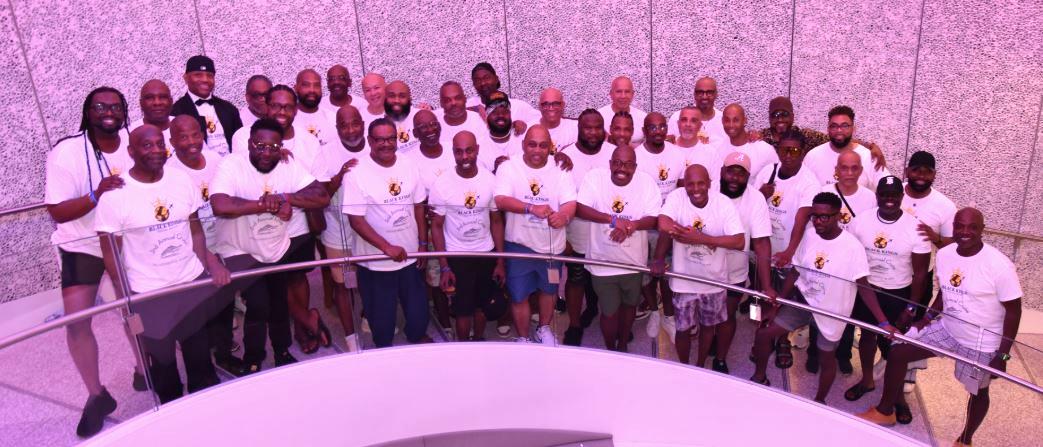
Traveling solo should be liberating — an adventure on your own terms. But for many of us, it comes with a price tag that feels more like punishment than freedom.
I learned this lesson through my experiences with Black Kings Travel, a group I supported for four years. I had no prior connection with any of the men before my first cruise. Though I was surrounded by a group, I approached the journey as a solo traveler.Like many others, I booked my cruises well in advance — sometimes three years before sailing. Most of the Black Kings were traveling as solo passengers, and at first, it seemed like a fair system. The company even offered discounts for booking the next trip immediately after the last one ended, which many of us took advantage of.
But in the past two years, everything changed. Despite our early commitments, Black Kings Travel began announcing — sometimes only months before sailing — that the payments we had made applied to double cabin occupancy only, and if we were traveling solo in a single occupancy cabein we now owed an additional fee. In my case, the amount was an additional $1,600.
The so-called “discounts” for booking early had turned into unexpected surcharges. Those who couldn’t come up where forced to find a roomate or pay the additional fee otherwise you were simply out of luck. Mind you the cabins consist of one double bed. Refund and cancellation requests went ignored by Black Kings Travel organizer, leaving travelers to either walk away from their investment or pay an addtional $1600 more to keep their spot.
What’s most appalling is the response — or rather, the lack of it — from Black Kings Travel’s leadership. The organizer made no effort to resolve these issues or assist those caught in this dilemma. Instead, appeals from loyal travelers have been ignored. Email communications were literally ignored.
After years of support, I’ve soured on the group’s management. This year we will final cruise with the group. In November we will take a final 7 day voyage to include excurison stops at Puerto Rico, the Dominican Republic and the Bahamas. Some have chosen to book the tour but not through Black Kings Travel. Unless I see real changes, I won’t be traveling with the group again. Unfortunately, my story is not unique — it’s part of a larger, systemic issue that solo travelers face across the travel industry.
The Solo Traveler Boom
Solo travel is no longer niche. Google search data shows the term “solo travel” steadily climbing throughout the 2010s, reaching record highs in 2025. Women, in particular, are driving this trend: a luxury travel network report recently revealed that nearly 70 percent of its solo clients are women.
Despite this surge, solo travelers are still treated as second-class customers, expected to pay more for the same experiences couples or families enjoy.
Common Problems Solo Travelers Face
- The Single Supplement
Most tour companies, cruises, and even safari lodges add extra fees — sometimes thousands of dollars — to cover “missing” occupants. Even when cabins or rooms would otherwise sit empty, solo travelers are forced to pay the difference. - Opaque Pricing
Airlines have been caught charging single passengers more than couples on identical flights, a quirk of fare algorithms that few travelers understand. Cruises often advertise “per person” rates that assume double occupancy, leaving solos blindsided later. - Lack of Transparency
Like my experience with Black Kings Travel, hidden costs often appear late in the booking process. By then, travelers have already invested in deposits or payment plans, making it nearly impossible to back out. - Limited Options
Hotels and cruise ships still cater to pairs. True single rooms or cabins are rare, forcing travelers to either pay more or bunk with strangers. - Missed Experiences
Some tours and excursions require a minimum number of guests. Solo travelers either pay extra or get excluded altogether.
Signs of Change
Thankfully, the tide is starting to turn. A growing number of operators now see solo travelers as a market worth serving:
- Cruise lines like Norwegian are redesigning ships to include dedicated solo cabins and lounges.
- Luxury operators such as Tauck have begun waiving single supplements on select river cruises.
- Adventure outfits in places like Tanzania are waiving solo fees during shoulder season.
- Lifestyle hotels (think Marriott’s Moxy or Hilton’s Tempo) are built around public spaces that welcome individuals as much as groups.
- Platforms like Tours by Locals and Airbnb Experiences give solo travelers the freedom to book curated group activities without long-term commitments.
These are encouraging steps — but change is uneven, and surprises like the Black Kings Travel surcharges are still all too common.
Tips for Avoiding the Solo Penalty
- Book in shoulder season. Operators are more flexible when rooms or cabins would otherwise go unsold.
- Seek out “no single supplement” deals. Many cruise lines and tour operators now advertise them.
- Use group excursion platforms. Join curated activities to experience community without committing to a group trip.
- Research thoroughly. Don’t rely on headline prices — read the fine print and ask directly about solo policies.
- Connect with solo travel communities. Online groups are invaluable for spotting red flags and sharing solo-friendly deals.
Final Thoughts
Solo travel is growing — not shrinking. Companies that continue to penalize independent travelers risk losing a loyal and expanding customer base.
For me, the lesson is clear: transparency matters. If companies want to earn the trust (and repeat business) of solo adventurers, they must stop hiding behind fine print and treat us as equals at the booking table.
Because traveling alone should feel like freedom — not like paying a penalty for daring to go it alone.
Mark Twain and the Music That Moved Him Most
August 30, 2025
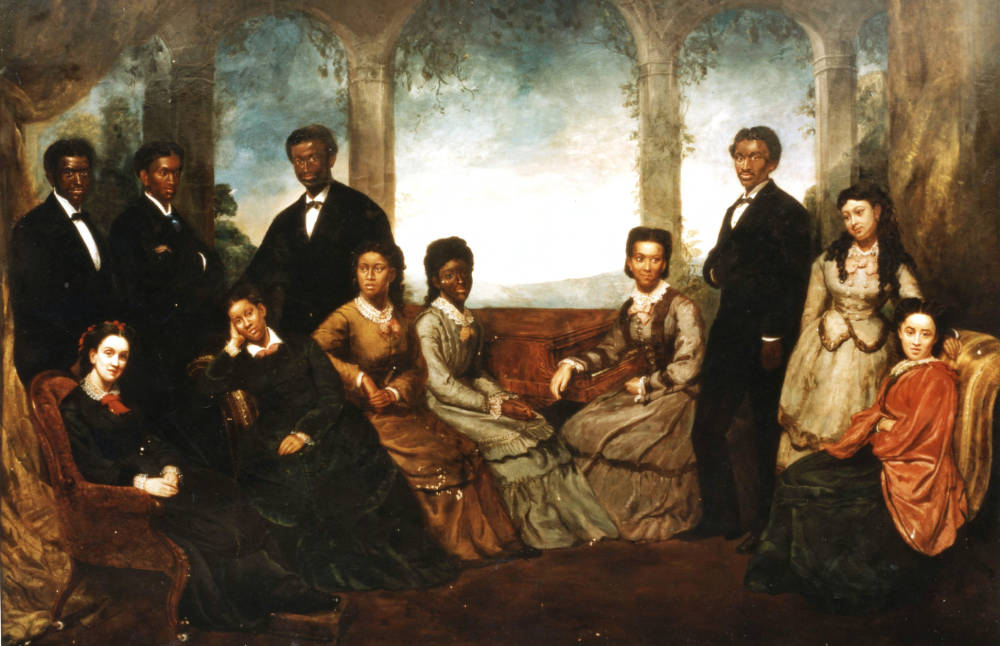
When the voices of Fisk’s Jubilee Singers struck Twain’s heart, he put his pen to work so the world could hear them too.
Osborne House, Isle of Wight UK 1873
The great doors of Osborne House swung open, and the young singers from Fisk University stepped into the royal drawing room. Their shoes clicked softly against the polished floor as they entered, eyes lowered, every movement stiff with composure. They were plainly dressed in dark gowns and modest coats, chosen for dignity rather than display. Behind their sober countenance lay a nervousness impossible to disguise.
Some had been born in slavery; others carried the fragile confidence of first-generation freedom. None could have imagined, when they left Nashville to raise money for a struggling school, that their voices would carry them here — before Queen Victoria herself. The silence of the chamber, the stern formality of the court, and the monarch’s piercing gaze pressed upon them with almost unbearable weight.
For a moment they stood still, honored yet overwhelmed. As soprano Maggie Porter later remembered, the Queen “listened with manifest pleasure,” but the singers themselves were uncertain of protocol:
“I wondered why the Queen did not speak these words to us,” Porter admitted, “for we were within hearing and heard her words of commendation and her command, but what could I know of English court etiquette.
Their apprehension, however, lasted only until George L. White, their leader, gave a small nod. At once the music began — a low, trembling entry that blossomed into the plaintive strains of Steal Away to Jesus. With the first notes, their fear fell away. The familiar harmonies steadied them, carrying them past doubt into the realm of song, where their duty lay.
The voices swelled, layering sorrow and hope into a sound that seemed to rise from history itself. For the singers, the weight of the moment dissolved into the power of their calling. For the Queen, it was a revelation. Victoria later recorded in her diary that they were “real negroes, eleven in number, six women and five men … they sing extremely well together.” She was visibly moved, and though her words were filtered through an attendant, her admiration was clear.
How Did They Get Here?
The image is astonishing: formerly enslaved youth from the American South, standing in the court of the most powerful monarch of the age. Yet the path from Nashville to Osborne House was neither smooth nor inevitable. It required not only the courage of the singers themselves, but also the advocacy of unexpected allies.
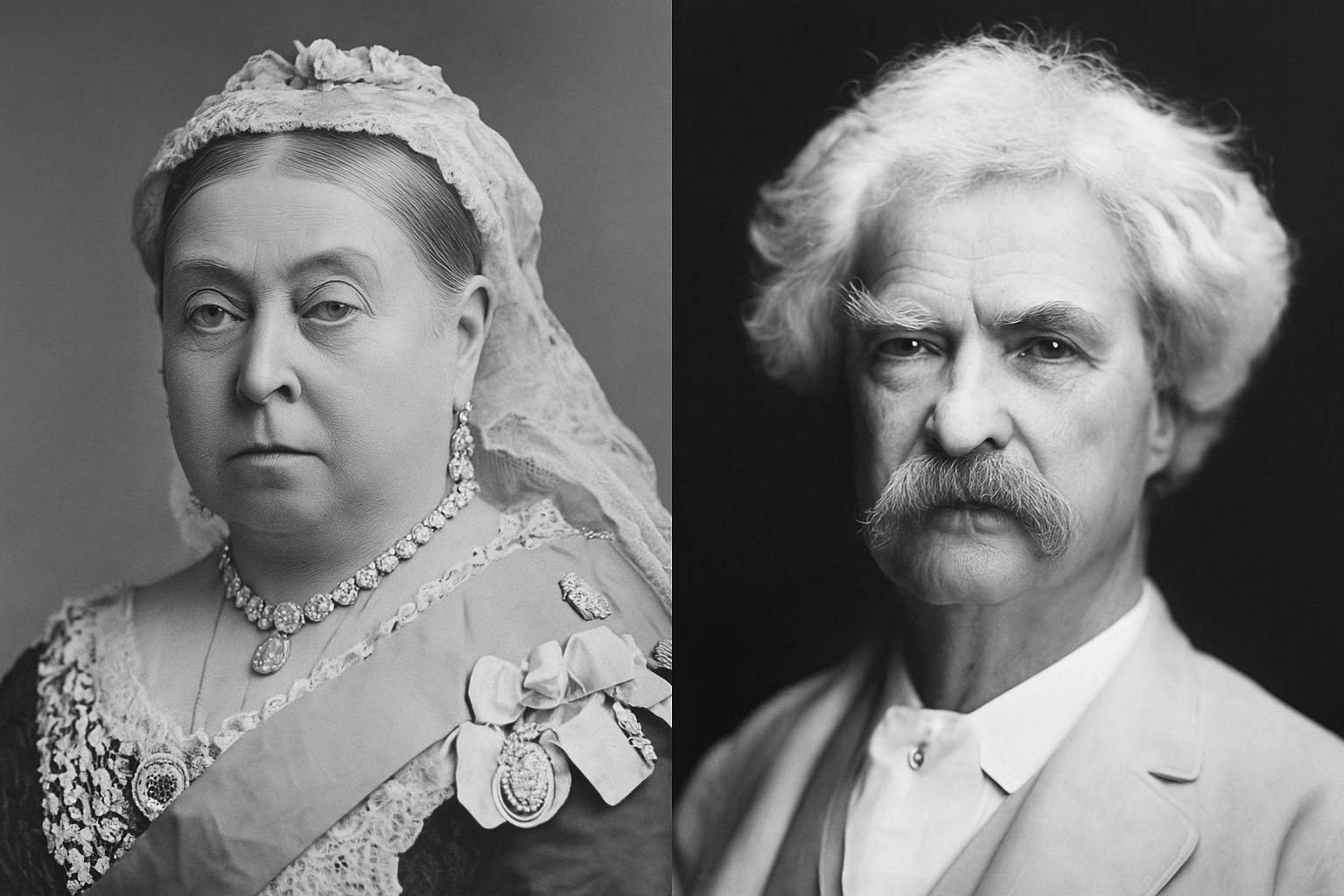
One of the most important — and perhaps the most enthusiastic — was Mark Twain. By 1873, Twain was America’s most famous author, his Innocents Abroad and Roughing It bestsellers on both sides of the Atlantic. He was also, improbably, a 19th-century groupie. When he heard the Jubilee Singers perform in Hartford, Connecticut, he was so overcome that he declared he “would walk seven miles to hear them again.” And unlike most admirers, Twain did more than applaud. He wrote letters, offered testimonials, and used his considerable fame to open doors that helped bring the Singers across the ocean and into Queen Victoria’s presence.
A Choir for a Cause
Fisk University, founded in 1866 in Nashville, was barely surviving by 1871. The buildings were ramshackle, funds nonexistent, and the mission of educating freedmen seemed at risk of collapse. George L. White, the school’s white treasurer and music instructor, had an audacious idea: take a group of Fisk’s best singers on tour to raise money.
The singers themselves were skeptical. The repertoire of African American spirituals was not considered respectable in the concert hall. White audiences expected comic “darky” songs or minstrel skits. But White and his students resolved to present the spirituals with dignity, as serious music and sacred testimony.
The experiment worked. Audiences in the North were spellbound. The troupe became known as the Fisk Jubilee Singers, named in reference to the biblical “year of Jubilee.” Yet as the tours lengthened, the young singers grew weary. Many were still teenagers. They faced racism on the road, endured long separations from home, and lived on scant meals. The group’s survival depended not only on their voices but on patrons who believed in them.
Twain Hears the Singers
One such patron was none other than Samuel Langhorne Clemens, better known as Mark Twain.
In 1873, Twain heard the Jubilee Singers perform in Hartford, Connecticut, where he had recently settled with his family. He was transfixed. The music stirred something deep within him — memories of the enslaved people he had known as a boy in Missouri, of the songs he had heard drifting from cabins along the Mississippi.
“I do not know when anything has so moved me as did the plaintive melodies of the Jubilee Singers,” Twain later wrote. He declared he would “walk seven miles to hear them again.”
For a man famous for his cynicism and satire, such words were startlingly earnest. Twain, it turned out, had become something of a 19th-century groupie.
A Literary Superstar Turned Publicist
Twain’s admiration went beyond private sentiment. He put his celebrity to work on the Singers’ behalf, acting almost like a modern influencer hyping his favorite band.
When the Jubilee Singers prepared to tour England, Twain wrote a glowing testimonial for them. Addressed to the editor Tom Hood and the London publisher George Routledge, his letter read in part:
“I heard them sing once, & I would walk seven miles to hear them sing again. … They reproduce the true melody of the plantations, & are the only persons I ever heard accomplish this on the public platform. The so-called ‘negro minstrels’ simply misrepresent the thing; I do not think they ever saw a plantation or ever heard a slave sing.”
For Twain, the distinction was critical. White minstrel shows had long mocked Black culture with grotesque caricatures. But the Jubilee Singers were the genuine article. “One must have been a slave himself,” he wrote, “in order to feel what that life was & so convey the pathos of it in the music.”
It was a bold statement from a Southern-born man whose father had owned enslaved people. Twain lent his authority as both a Southerner and a national celebrity to validate the Singers’ authenticity. His letter was published, circulated, and used to promote the Singers in Britain. It worked: audiences flocked, and doors opened.
Twain the Advocate
Why did Twain become such a vocal supporter? Part of the answer lies in his evolving views on race.
Though he grew up steeped in slavery, Twain became increasingly critical of racism as he matured. He later befriended Frederick Douglass, denounced lynching, and even paid tuition for Black students at Yale Law School and Harvard Medical School. His defense of the Jubilee Singers fit into this larger arc.
But there was also something personal. Twain’s literary genius thrived on exposing hypocrisy and celebrating authenticity. In the Jubilee Singers, he saw authenticity made audible. Their music wasn’t a show; it was lived experience transformed into art. For Twain, that demanded not just applause but action.
From Twain’s Pen to Victoria’s Ears
The impact of Twain’s fan-like advocacy was not trivial. His endorsement bolstered the Singers’ credibility as they crossed the Atlantic. In Britain, where Twain was already a celebrated author, his words helped convince skeptical patrons that the troupe deserved a hearing.
Once in London, the Singers attracted aristocrats, clergy, and philanthropists. Their cause aligned with Victorian ideals of moral uplift and Christian duty. It was through these networks that they secured an invitation to Osborne House.
Thus, when the Singers stood before Queen Victoria in 1873, they carried not only the weight of their own voices but also the momentum created by supporters like Twain. The Queen was so moved that she commissioned a formal group portrait of the singers, painted by her court artist Edmund Havel. Today, that portrait hangs in the Appleton Room of Jubilee Hall at Fisk University — a permanent reminder of how far their music carried them.
Twain as Groupie, Twain as Critic
The image of Mark Twain as a wide-eyed fanboy may seem at odds with his reputation as America’s great satirist. Yet it reveals something profound. Twain could be caustic about politics, religion, and human folly, but when he encountered truth and beauty, he responded with disarming sincerity.
In the Jubilee Singers, he found an art form immune to parody. He could lampoon politicians and preachers, but not the raw, soaring strains of Go Down, Moses sung by young men and women who had known slavery’s lash. For once, Twain dropped his mask of irony and simply applauded.
Conclusion: Twain’s Greatest Ovation
Mark Twain’s relationship with the Fisk Jubilee Singers was more than an episode of admiration. It was a moment when America’s most famous writer used his fame to amplify voices that the world might otherwise have ignored.
As a “19th-century groupie,” Twain wrote letters, offered testimony, and urged others to hear what he had heard. His words helped usher the Jubilee Singers from Nashville’s dirt floors to Europe’s gilded halls, from obscurity to a royal audience.
The singers saved Fisk University, raised the stature of African American spirituals, and left a legacy enshrined in song. Twain, in turn, left a legacy of fandom not for himself but for others.
Perhaps his greatest applause was not for his own jokes or books, but for a choir of emancipated youth whose music still echoes — in Jubilee Hall, in Nashville, and far beyond.
Trump’s National Guard Presence in DC Is Bad for Business and Tourism
August 28, 2025
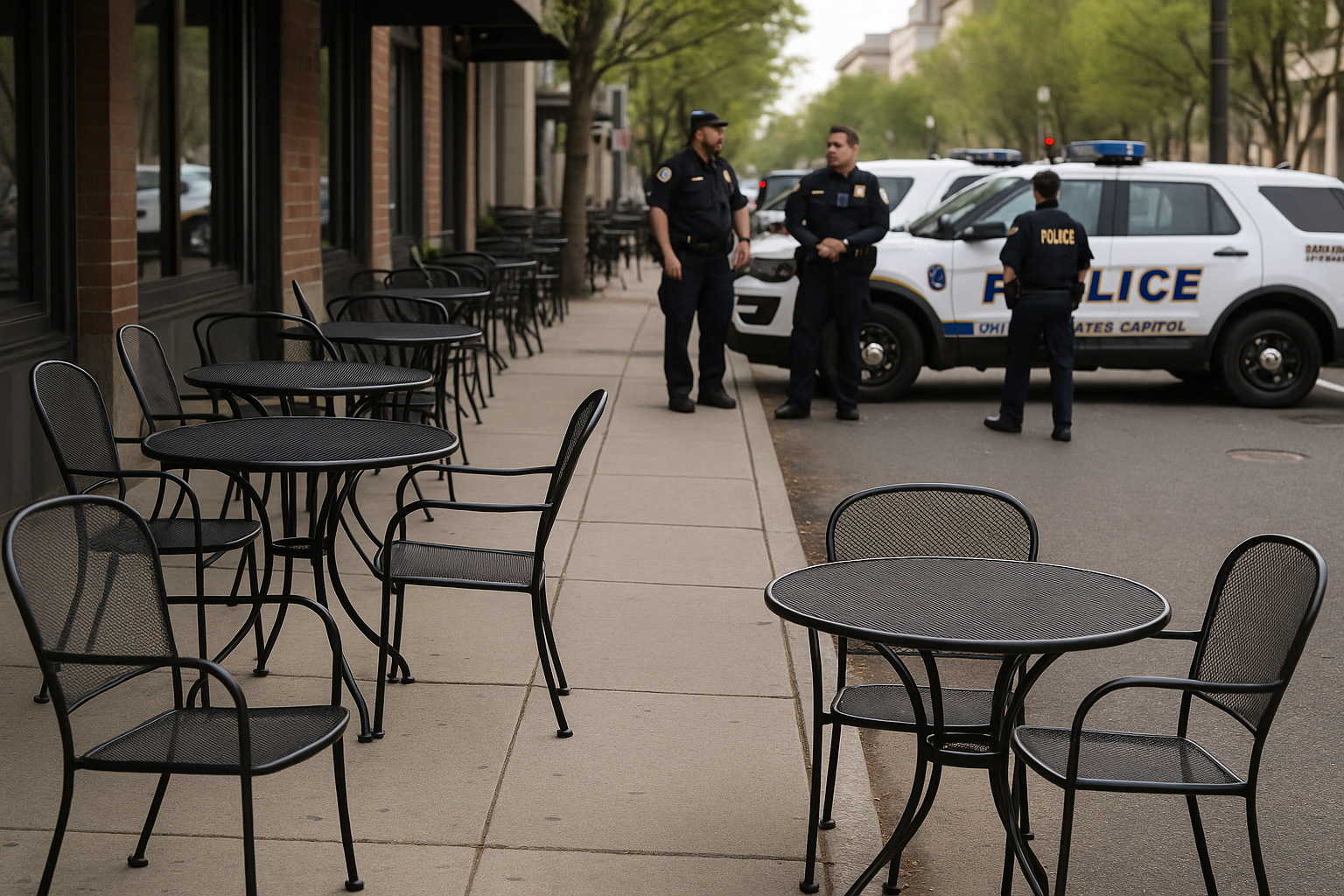
For residents, business owners, and visitors alike, the impact is immediate and damaging. A city that thrives on tourism and conventions cannot afford to project an image of intimidation and instability. When visitors are met not with open boulevards and welcoming guides but with checkpoints, armed patrols, and a climate of fear, the message is clear: this is not a place to relax, explore, or invest. According to recent news report Tour Guides are feeling it.
Washington, D.C. has always balanced two identities: the seat of American democracy and a vibrant world-class city. Millions visit each year for the museums, monuments, history, and culture that make the capital a global destination. But that balance is being undermined by the growing presence of heavily armed, politically aligned State National Guard forces deployed under Donald Trump’s direction.
Business Takes a Hit
D.C. hosts thousands of conferences and corporate gatherings every year, feeding hotels, restaurants, and local shops. These events depend on the perception of safety and openness. If the city begins to look and feel like a militarized zone, planners will take their events elsewhere—robbing the city of vital revenue and opportunities for growth.
Tourism Suffers Too
Families from across the country and international travelers come to Washington for a once-in-a-lifetime experience of democracy in action. What they expect is freedom of movement, cultural richness, and welcoming hospitality. What they increasingly encounter are scenes more fitting to a police state. For foreign visitors especially, this tarnishes America’s image as a nation of liberty and undermines Washington’s role as a showcase capital.
The Wrong Signal to the World
D.C. has weathered crises before—terror threats, mass protests, even insurrection. But those were moments, not the new normal. If Trump’s “police presence” is allowed to become permanent, it risks reshaping the city’s brand entirely. Instead of a hub of history and opportunity, it becomes a stage for political theater and intimidation. That’s not just bad optics. It’s bad economics.
Washington deserves better. The capital should be a place where democracy feels alive and accessible, not barricaded and patrolled. Protecting business and tourism means protecting the spirit of openness that makes the city thrive.
Israel’s Dangerous Path: Starvation, Silencing, and the Cost of Netanyahu’s Politics
August 26, 2025

Reports of Israel’s apparent policy of starving Palestinians and targeting journalists are both shocking and morally indefensible. These actions not only violate the principles of international law but also erode the foundations of human dignity. Starvation is not a weapon of war—it is an assault on humanity itself. The killing of journalists is not an accident of conflict—it is a deliberate attempt to silence truth and shield brutality from global accountability.
What makes this situation even more tragic is that it will bear consequences for generations. The legacy of deliberately inflicting hunger and death on civilians, while extinguishing voices of truth, ensures that any goodwill Israel once commanded will be replaced by anger, resentment, and bitterness that will endure for decades to come.
Prime Minister Benjamin Netanyahu stands at the center of this crisis. His leadership has become defined not by safeguarding Israel’s future but by clinging to power. His policies reflect little concern for the Israeli hostages still in captivity. Instead of prioritizing their release, his government appears focused on prolonging war and conflict—an effort not to secure peace, but to extend his own political life.
This is not just bad for Palestinians. It is bad for Israel. It deepens Israel’s isolation, fuels extremism, and jeopardizes any hope of long-term security. The moral credibility of a nation cannot survive if it is built on collective punishment and censorship of truth.
History will remember these choices. And the verdict will not be kind.Silence in the face of injustice is complicity. Citizens everywhere must demand better—from Israel, from their own governments, and from international institutions. Write your representatives, support humanitarian organizations providing food and medical aid, and amplify the voices of journalists and truth-tellers who risk their lives to document reality. Pressure must be applied until the blockade of starvation is lifted, the protection of journalists is guaranteed, and genuine negotiations for peace are pursued.
The path forward cannot be built on hunger and repression. It must be built on justice, accountability, and humanity.