Victoria and Albert: Partners in the Age of Curiosity
December 29, 2025
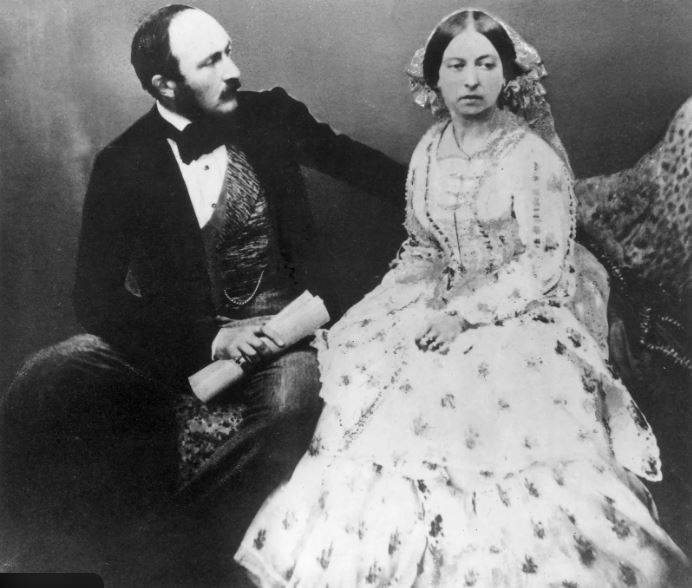
Victoria, the Masterpiece series now streaming on Netflix, sparked my curiosity about Prince Albert. What surprised me most was not Queen Victoria—whose force of will we already know—but the man who so often moderated her. On screen, he is portrayed as her “better half,” a phrase that never quite sat right with me. Curious, I wanted to know more about this man who was not better than Victoria, but very much her equal—and in some ways, ahead of his time in ways that still matter.
I began to see him differently: wrapped in a dark frock coat, stovepipe hat in hand, moving calmly through an age trembling with change. Steam engines. Factories. Iron rails slicing through countryside and custom alike. People feared machines would steal their work, their dignity, their place in the world. Sound familiar?

Albert understood something many of his contemporaries did not. The crisis of his age was not mechanical—it was psychological. Machines were forcing people to ask a dangerous question: If a machine can do what I do, what am I for? That question unsettled Victorian Britain just as artificial intelligence unsettles us today.
The Great Exhibition of 1851 was Albert’s answer. Not an answer carved in stone, but one built of glass and iron—transparent, ambitious, and unapologetically modern. He put invention on public display and called it progress, not to glorify machines, but to discipline fear with understanding. Curiosity, in his mind, was not idle wonder. It was civic responsibility.
The skeptics scoffed then, just as they do now. They warned of job loss, moral decay, and human redundancy. And yes—jobs disappeared. Skilled artisans were displaced. Old ways collapsed. But history did something inconvenient for the pessimists: it kept creating work. More work than before. New kinds of work. Work no one had words for yet.
Industrialization didn’t eliminate labor; it rearranged it. Engineers replaced blacksmiths. Clerks replaced scribes. Managers, inspectors, designers, teachers—all emerged because productivity increased demand and forced economies to expand. The real problem was never a lack of work. It was the failure to prepare people for transition.
That is the lesson we are refusing to learn again.
Artificial intelligence feels different because it reaches into the mind itself. If the Industrial Revolution mechanized muscle, AI mechanizes cognition. Writing, analyzing, predicting—once considered uniquely human—now shared. No wonder people panic. But when I look at history through Albert’s eyes, I see a pattern, not a prophecy of doom.
Twenty years from now, AI will not have erased human work. It will have redefined it. Routine cognitive labor will shrink, but roles requiring judgment, ethics, care, creativity, and accountability will expand. New professions will arise around governing, interpreting, and humanizing intelligent systems—just as factories once gave rise to modern management and public education.
Albert believed progress without moral architecture was dangerous. He insisted that education, ethics, and public understanding had to keep pace with invention. That conviction—quiet, principled, unfashionable—is what makes him feel so modern now.
So when I hear today’s debates about AI, I imagine Prince Albert adjusting his frock coat, stepping forward calmly, and reminding us: curiosity is not the enemy. Fear is. And history, if we’re willing to look it in the eye, has already shown us the way forward.
Guide and Traveler – Simpatico in San Juan
December 3, 2025
Selecting the right guide is often the luck of the draw—until it isn’t. Any seasoned traveler knows that a tour is far more than a sequence of stops. It’s a human exchange of energy, curiosity, insight, and personality. When the chemistry is right, the experience becomes unforgettable. When it’s wrong… well, we’ve all had that tour.
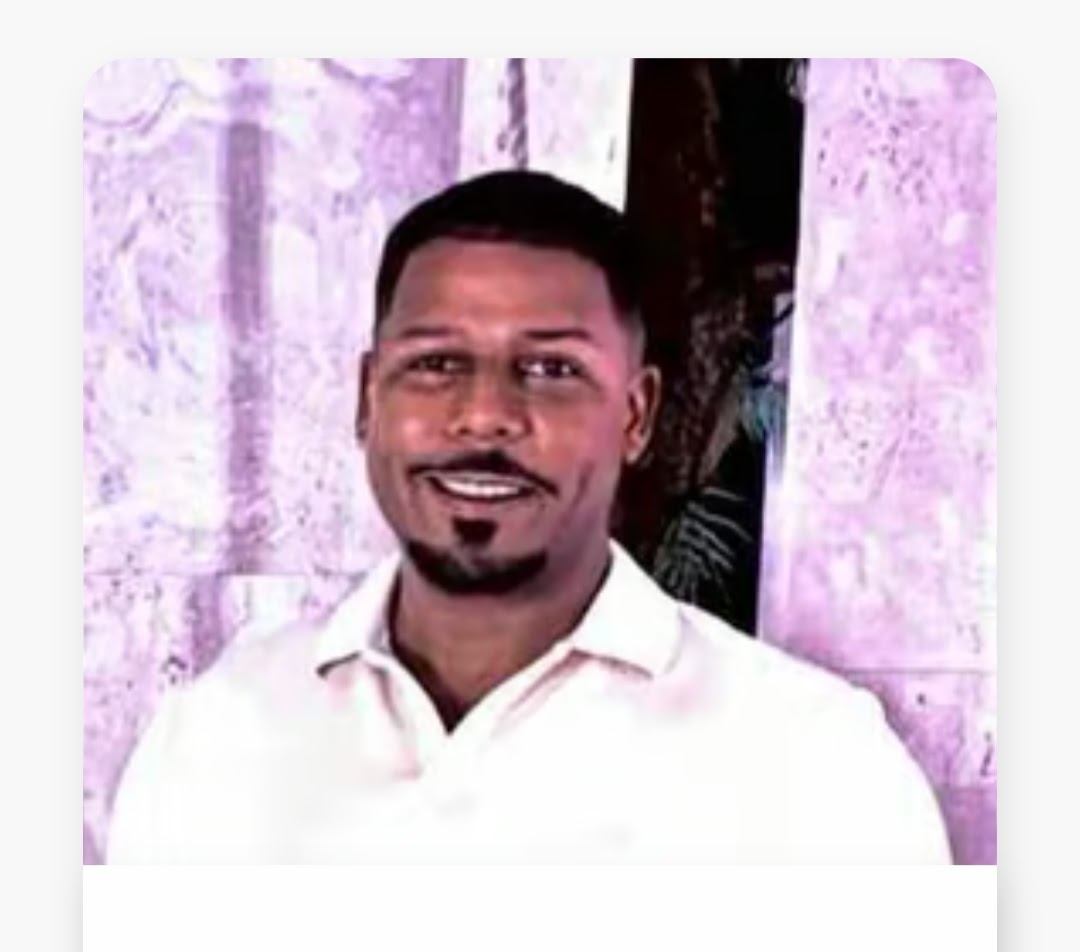
On the Black Kings Travel San Juan Historical and Cultural Tour, our group was fortunate enough to find the right guide—Ronald Pérez—through Tours By Locals. Full disclosure: I’m a TBL guide myself in Washington, DC, so I know what it takes to deliver at a high level. Ronald had the right stuff from the moment we met him.
A Guide Who Understands His Guests
Black Kings Travel is not your typical vacation group. We’re a network of mature, professional African American men—business owners, executives, scholars, creatives—who travel the world both for leisure and with an eye toward international investment and cultural exchange. Many of us have discretionary income, business interests, and a desire to truly understand a place: its history, its culture, its communities, and its economic opportunities.
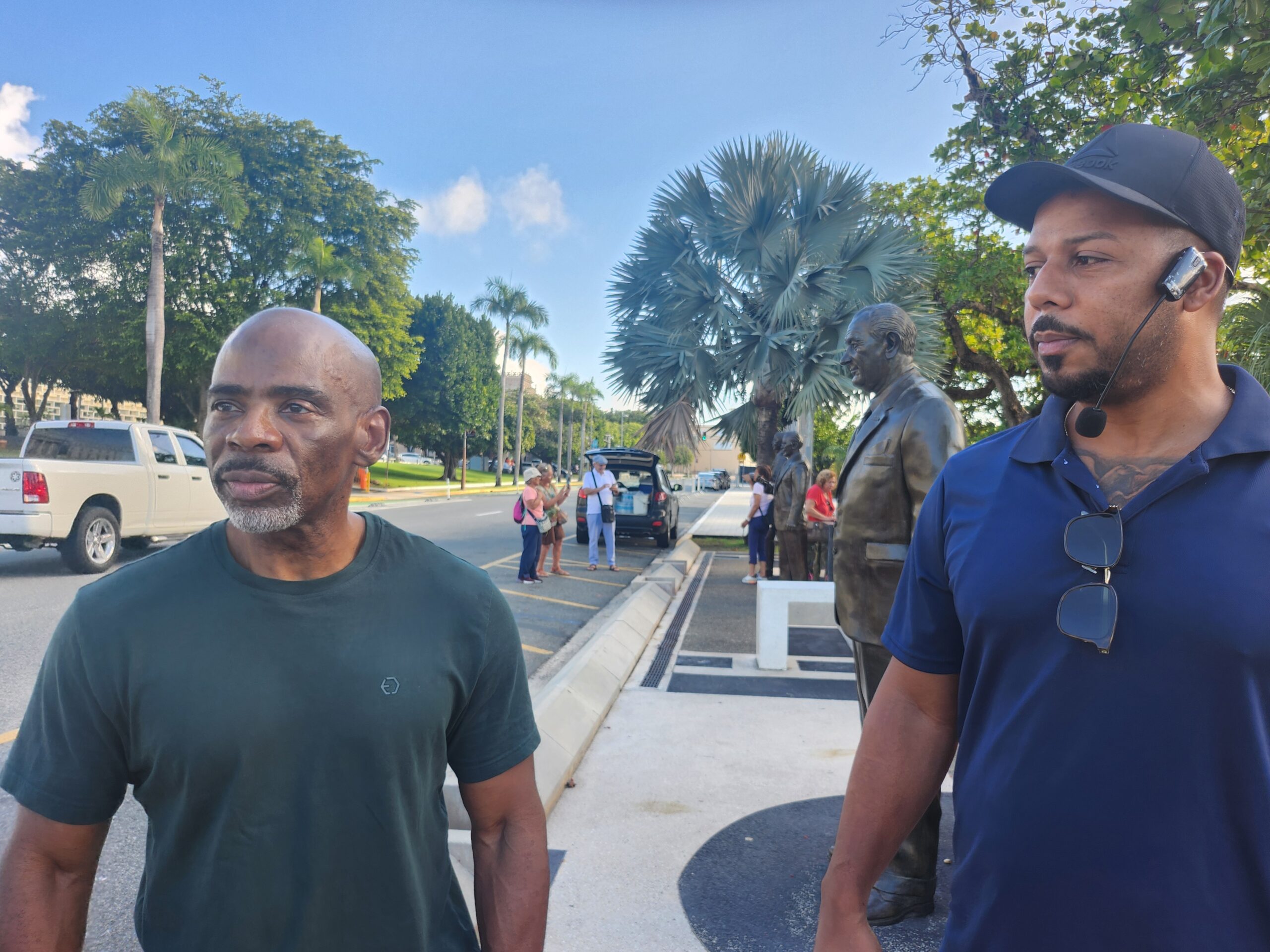
This particular tour was intentionally small—under a dozen men representing business, academia, music, art, and literature. What we needed was not just a sightseeing guide but someone who could also speak intelligently about Puerto Rico’s business climate, investment landscape, social rhythms, and economic future. Ronald met that challenge with ease.
Knowledge, Poise, and True Connection
Whatever questions we threw at him—history, infrastructure, tax incentives, artistic movements, political dynamics, cultural etiquette—Ronald had a ready answer. And when he didn’t, he pointed us to where we could find one. He did all this while sharing the island’s Afro–Puerto Rican heritage, the roots of its musical brilliance, and the resilient spirit of its people. But great guiding is not just about talking.
It’s about connecting.
Ronald knew how to read our group—professional men interested in more than the surface-level highlights. He tailored his commentary to speak to our curiosity about culture, community, and commerce, giving us a broad yet nuanced perspective on Puerto Rico.
A Meal With the Locals: Sabores Cocina Artesanal
One of the highlights of the day came when Ronald took us off the beaten path for an authentic culinary experience. Instead of steering us toward a tourist-heavy restaurant, he guided us to Sabores , a local establishment where Puerto Ricans themselves gather to eat, talk, argue sports, and enjoy life. There, we rubbed elbows with the locals—literally. It wasn’t a staged “cultural experience.”
It was the real thing.
We tasted dishes prepared with love and tradition, learned the backstory of neighborhood recipes, and soaked in the energy of a place that tourists rarely find on their own. This stop alone was worth the tour price, because it gave us what we value most: authenticity.
Why the Right Guide Matters
In today’s travel world, many people treat tours as simple transactions. But for groups like ours—men who travel with intention, purpose, curiosity, and respect—the guide becomes the bridge between the visitor and the deeper truth of a place. A great guide can:
- Provide meaningful cultural insight
- Offer nuanced understanding of local business and investment trends
- Translate a place beyond what’s printed in guidebooks
- Create an atmosphere where real dialogue can unfold
- Bring guests into the spaces where locals live, create, and eat
Ronald did all of that.
The Takeaway
Choosing the right guide is not simply about knowledge of landmarks—it’s about chemistry, cultural fluency, emotional intelligence, and the ability to read the interests of the group.
Our Black Kings Travel group left Puerto Rico with more than memories. We left with a deeper understanding of San Juan’s culture, community, business pulse, and flavor—thanks to a guide who brought insight, warmth, and authenticity to the experience.
Puerto Rico is a vibrant island with a global cultural presence and a growing business landscape. If you want a guide who can introduce you to both—and take you where the locals actually eat—Ronald Pérez has the right stuff.
Unveiling Annie Smith (1854 – 1907)
November 1, 2025
A Gum Springs Legacy
The Portrait and the Spark
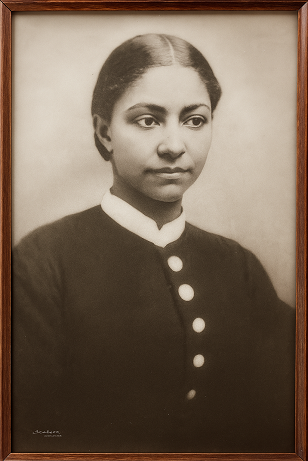
My mother was walking me hand-in-hand to Miss Roscoe’s first grade classroom. It was my first day of school when I saw the black-and-white portrait of Annie M. Smith hanging outside the principal’s office at Drew-Smith Elementary School in 1957. Alongside Dr. Charles Drew, the woman’s serene image exuded a quiet dignity and pride. Together, their portraits embodied the highest ideals of Black pride—Dr. Drew, a pioneering medical scientist, and Annie Smith, a trailblazing educator—offering young minds living proof that intellect, resilience, and service were the true measures of character and achievement. At the time, I had no idea how profoundly Annie Smith’s legacy would echo in my own family’s history—or how much she had contributed to the community of Gum Springs.
The portrait presents Mrs. Smith with the serene confidence of a woman who has endured much and given even more. Her features are composed and symmetrical, her gaze direct yet contemplative, projecting a quiet authority. There is a graceful restraint in her posture and expression—neither stern nor soft, but resolutely calm, as though accustomed to bearing responsibility with dignity.
She exudes a quiet beauty, not ornamented or showy, but refined and self-possessed. The simplicity of her dress and the modest styling of her hair speak to her values: intellect, discipline, and purpose. There is in her bearing something of the educator and something of the visionary—someone who walked into Reconstruction-era classrooms not just to teach letters and numbers, but to model Black womanhood with elegance, strength, and grace.
Seen through the lens of the Gilded Age, she stands out as a “class act” in every sense: intelligent, poised, and committed to community uplift. In her expression is the quiet determination of a woman who knew the value of education, the meaning of freedom hard-won, and the burden—and blessing—of being first.
Years later, I returned to her story with new eyes discovering much more. Annie Smith wasn’t just the first Black teacher in Gum Springs. She was a wife, a farmer, a storekeeper, and a woman of remarkable independence and strength. What began as a childhood impression became a personal journey to uncover the deeper truths of her life and times.
Early Life and Marriage
Annie Maria Arnold was born on May 6, 1854, most likely in Virginia. While little is known about her childhood or early education, records confirm that she married William Dandridge Smith on January 8, 1874, in Alexandria, Virginia. [1] Smith, was West Ford’s grandson, the founder of Gum Springs, and the son of Jane Ford and Porter Smith, a blacksmith at Mount Vernon. [i]
Dandridge and Annie suffered the heartbreaking loss of their only child in infancy. Yet their marriage endured, symbolizing a union deeply rooted in community strength and resilience. The Smiths lived on adjoining parcels of land totaling nearly 27 acres, though importantly, the land was not jointly held. Annie owned nearly 15 acres, and Dandridge about 12, suggesting intentional economic independence within the marriage—a rare and telling decision for the time. [2]
Educator in a Post-Reconstruction System
Annie Smith began teaching in Gum Springs in the 1870s. The school was originally established on land donated by her mother-in-law, Jane Ford, and staffed by Quaker teachers with aid from the Freedmen’s Bureau. When federal support waned, the community stepped in. Annie was likely mentored on-site, learning through direct instruction and community support rather than formal training, as was common among Black educators in that era.[3]
It is likely Annie Smith was trained, mentored and recruited into the Freedmen’s Bureau system of teachers. Most of the white teachers recruited from up north usually lasted no more than a year. In1877, Annie Smith was 24 when Reconstruction ended with the Compromise of 1877. As a young African American woman teacher in Fairfax County, she was stepping into a hostile and paternalistic system that often questioned the competence of Black educators, underpaid them, and placed them in schools with inferior resources.
Unlike the transient teachers who came and went, Annie Smith was a daughter of the community—her roots ran deep in the very soil she taught upon, and it was this intimate bond with her neighbors and their children that sustained her unwavering commitment to their education and advancement. Despite this, teachers like Smith were central to the survival and development of Black education. Many such educators not only taught multiple grades in one-room schoolhouses but also handled administrative duties, advocated for community needs, and mentored generations of children.
By 1870 towards the end of Reconstruction when Annie was 16, Fairfax County had 13 schools for African American students and 28 for whites. The system was separate, unequal, and deliberately underfunded. Black teachers were paid less and often worked in unsafe or dilapidated buildings. Annie stood at the front of one of these classrooms, without the protections or prestige of her white counterparts—but with the resolve to teach children in a community that had long valued education as a path to liberation.
Local oral histories speak to Annie’s dedication—recounting her long journeys by foot or horseback to reach her students, her unwavering presence at the front of the classroom, and her firm yet compassionate teaching style.[4] She likely taught half a year, adapting to the seasonal rhythms of farming life. The school calendar was shorter and more fluid than today, perhaps six months on, six months off—allowing her to divide her time between education and the demands of rural subsistence.
Farming, Business, and Land Ownership
While Annie taught, she also farmed. Together, she and Dandridge operated a successful dairy farm in the 1890s, a period when dairy was a thriving industry in Fairfax County. They owned at least three horses (two attributed to Dandridge, one
[1] Alexandria, Virginia, Marriage Records, 1874.
[2] “Colored Land Tract List,” Fairfax County, 1894. Listing land tracts by race allowed white officials to monitor and limit the growth of independent Black communities like Gum Springs. Tract books served as a tool of social control, making it easier to enforce vagrancy laws, debt peonage, or discriminatory zoning.
[3] Freedmen’s Bureau Records, RG105; research.centerformasonslegacies.com.
[4] Oral history accounts from Gum Springs residents; further documentation may be available through the Gum Springs Historical Society. See Judith Saunders Burton, A History of Gum Springs, Virginia: A Report of a Case Study of Leadership in a Black Enclave. 1986. PhD diss., Peabody College for Teachers of Vanderbilt University.
[i] My connection to the West Ford legacy is one of familial interweaving through marriage. My mother’s stepfather, Bruce Saunders, was a third great-grandson of West Ford. As is common among the descendants of those once enslaved at Mount Vernon, our families are linked by a complex and enduring network of kinship. Over generations, these bonds have created a community in which many individuals are, by blood or by tradition, considered cousins—and they continue to refer to one another as such, honoring the shared legacy of resilience and connection.
[i]Conflicting accounts of the origins of education in Gum Springs reveal not a contradiction, but a layered history of community-led schooling. Freedmen’s Bureau records cite an early private school providing property to served as a schoolhouse led by Samuel K. Lee as early as 1865. Only to be burned by arsonist but swiftly relocated to the home of Charles Ford. Oral tradition credits Rev. Samuel Taylor, a formerly enslaved man, with establishing a church-based school at Bethlehem Baptist Church. Later, Jane Ford’s land donation enabled the construction of a formal schoolhouse, supported by Quaker educators. Together, these efforts mark a continuum of African American educational self-determination in the Reconstruction era.
October 12, 2025
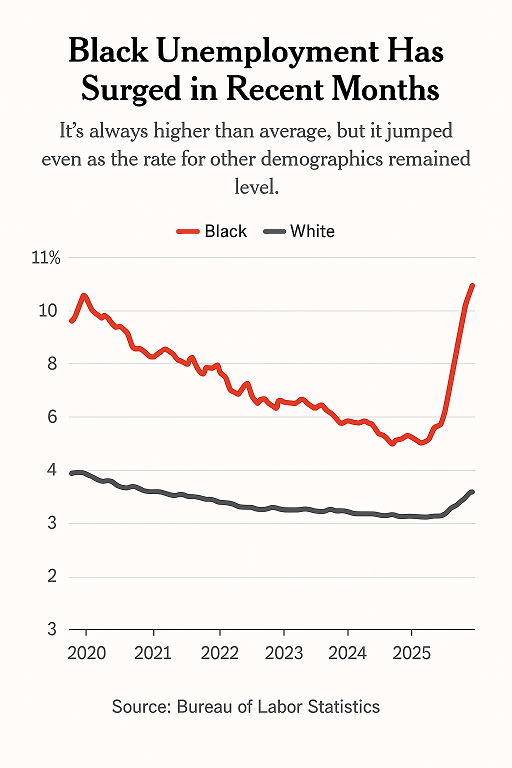
Donald Trump’s 2024 campaign promised “jobs, not handouts” and “opportunity for all.”
Yet barely a year later, the nation’s most vulnerable workers—particularly African Americans—are facing a sharp rise in joblessness.
Black unemployment has jumped from 6 percent to 7.5 percent in just four months, while white unemployment has fallen slightly.
This reversal has taken place under an administration that has gutted diversity and inclusion programs, slashed the federal workforce by more than 200,000 positions, and frozen hiring in agencies where Black professionals have historically found stable, middle-class careers.
The Project 2025 Connection
When asked about Project 2025, the sweeping blueprint for a far-right restructuring of government and society, Trump claimed he “knew nothing about it.”
Yet nearly every major policy emerging from his administration—from dismantling federal diversity programs to shrinking the civil service—tracks directly with its playbook.
Project 2025 envisions a return to pre-civil-rights governance, with fewer checks on executive power and fewer safeguards for racial equity.
The resulting policies have erased decades of incremental progress, especially in sectors where Black employment once thrived: education, health care, and the federal government itself.
The Myth of Reverse Discrimination
Trump’s campaign repeatedly invoked “reverse discrimination” as the justification for ending affirmative-action and DEI initiatives.
But that claim collapses under scrutiny.
There is no evidence that hiring or admissions practices have systematically penalized white applicants.
What these programs did accomplish was create pathways for qualified Black and Brown candidates to be seen, interviewed, and considered.
The administration’s assault on DEI is not about fairness—it’s about erasure.
It silences conversations about structural inequality by pretending those inequalities no longer exist.
Who Pays the Price
The data tell the story plainly:
- Black women in professional roles have seen the steepest job losses.
- Young Black college graduates face closed doors in the federal sector due to hiring freezes.
- Low-income Black households are the only racial group whose median income fell and poverty rate rose last year.
These are not coincidences—they are the predictable outcomes of deliberate policy choices made under the banner of “anti-woke” populism.
The MAGA Mirage
Even many within the MAGA movement are beginning to realize that Trump’s “America First” vision primarily serves the wealthy and well-connected.
Factory closures, inflation pressures, and cuts to federal infrastructure spending have left working-class Americans—Black, white, and brown—worse off.
Yet the myth persists, propped up by grievance politics and racial scapegoating.
The real story is not about protecting working Americans—it’s about protecting privilege.
A Moment of Reckoning
The spike in Black unemployment is not an economic accident; it’s a moral indicator of where the nation’s leadership has chosen to direct its empathy—and where it has withdrawn it.
A government that attacks fairness, representation, and opportunity cannot credibly claim to defend freedom or prosperity.
The data may be sobering, but they offer clarity:
This is what happens when political deceit meets economic reality.
Trump’s campaign may have won votes on promises of inclusion and progress, but his policies are delivering exclusion and regression.
Call to Action
If this nation truly believes in equal opportunity, we must rebuild the structures now being dismantled.
That means defending DEI, restoring public-sector pathways for young Black professionals, and confronting the dangerous fiction of “reverse discrimination.”
Because as history shows, when Black America suffers, the entire democracy weakens.
Tour Guide Log Entry: Serendipity at the Silver Diner
October 11, 2025
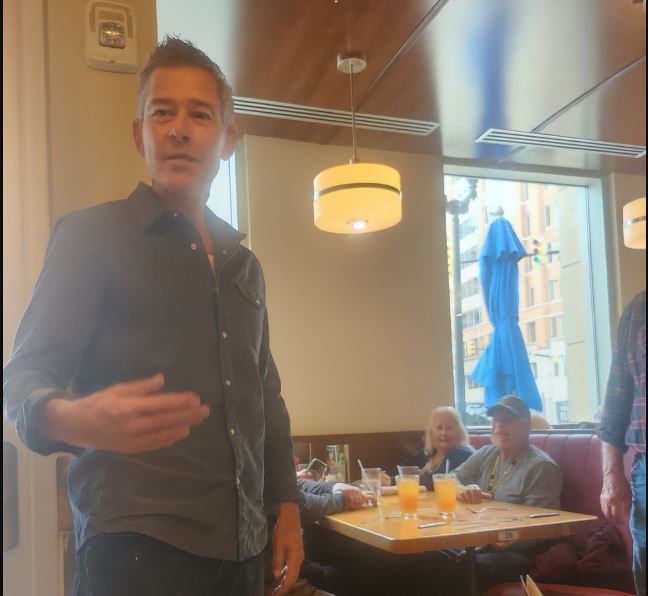
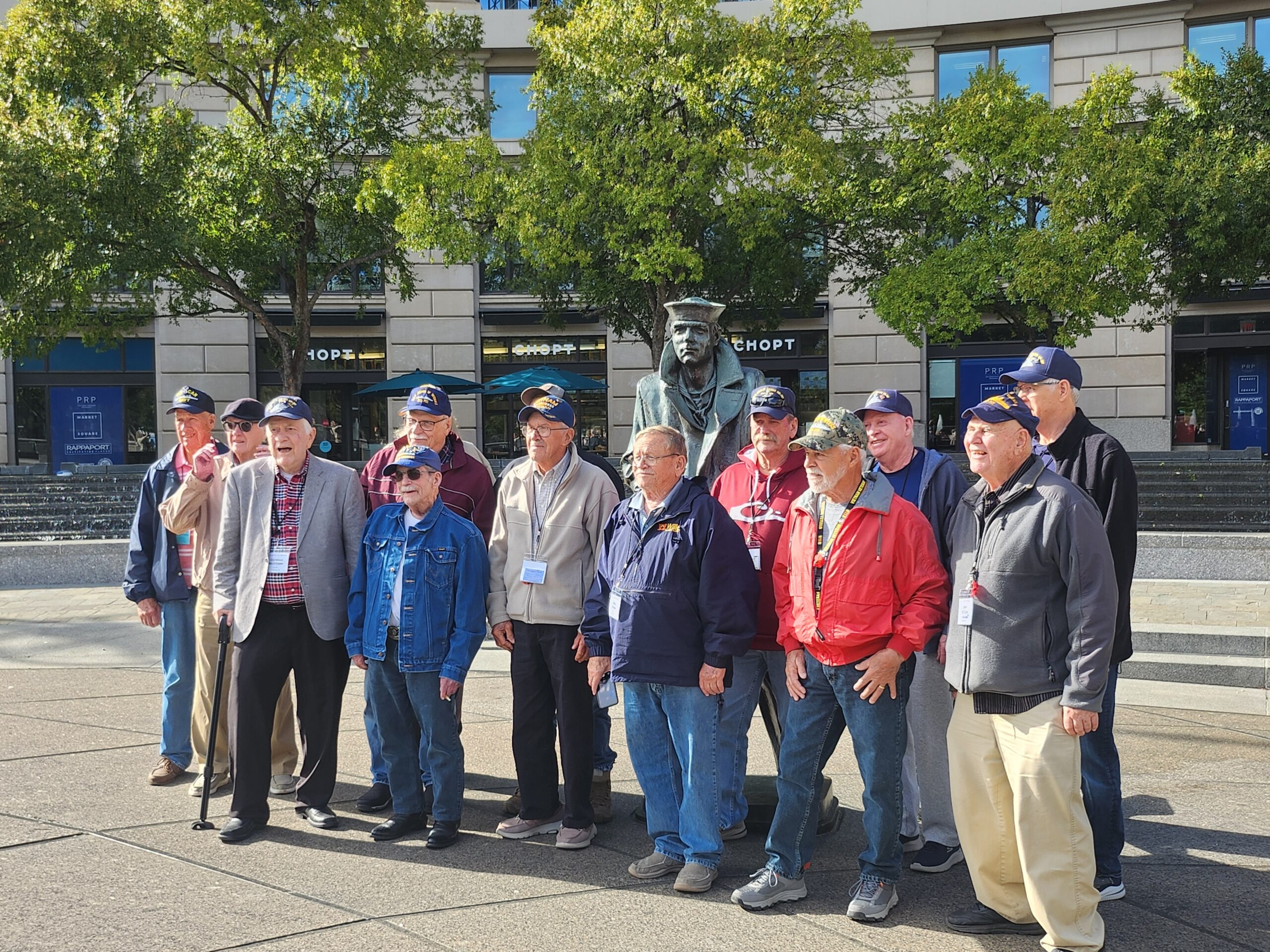
There are times when the best-laid itineraries can take an unexpected turn. I had the honor of organizing and leading a military-themed tour for a group of Vietnam-era Navy veterans who served aboard the USS John Weeks (DD 701), accompanied by their wives. We had spent the morning at Arlington National Cemetery, where the group paid their respects to fallen comrades. For lunch we stopped at the Silver Diner in Ballston.
No sooner had everyone settled into their booths than a sudden stir swept through the restaurant. A film crew entered, followed closely by Secret Service agents and the Secretary of Transportation, Scott Duffy and his wife. The atmosphere shifted from casual conversation to astonished excitement.
For the veterans, this unplanned encounter felt like a reward for their service—an unexpected brush with public life. Secretary Duffy and his wife graciously greeted the group, took photos, and fielded questions, all while cameras rolled. What was meant to be a one-hour lunch stretched to nearly an hour and forty-five minutes, as the Secretary’s team filmed segments and mingled freely among our tables disrupting the wait service.
When the couple departed, representatives from the South Carolina–based production company moved swiftly through the diner, asking everyone to sign film footage release forms. There was no clear explanation of the project, leaving many of us feeling as though we’d been drafted into a documentary without notice. The veterans didn’t seem to mind, but the delay resulted in overtime charges from the bus company and an adjustment to the rest of our schedule.
Reflection: Managing the Unexpected
Tours involving elderly guests or those with mobility challenges often require flexibility, patience, and good humor. Yesterday’s surprise encounter was a lesson in all three. In this line of work, control is often an illusion—every itinerary is vulnerable to the unpredictable. Yet sometimes, those unscripted moments are the ones guests remember most. We plan for precision, but we live—and learn—in the spaces where spontaneity takes over.