
October 12, 2025
Donald Trump’s 2024 campaign promised “jobs, not handouts” and “opportunity for all.”
Yet barely a year later, the nation’s most vulnerable workers—particularly African Americans—are facing a sharp rise in joblessness.
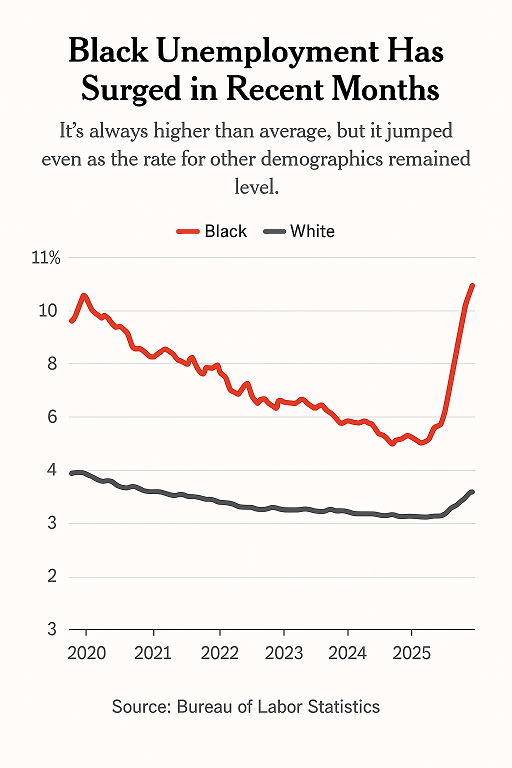
Black unemployment has jumped from 6 percent to 7.5 percent in just four months, while white unemployment has fallen slightly.
This reversal has taken place under an administration that has gutted diversity and inclusion programs, slashed the federal workforce by more than 200,000 positions, and frozen hiring in agencies where Black professionals have historically found stable, middle-class careers.
The Project 2025 Connection
When asked about Project 2025, the sweeping blueprint for a far-right restructuring of government and society, Trump claimed he “knew nothing about it.”
Yet nearly every major policy emerging from his administration—from dismantling federal diversity programs to shrinking the civil service—tracks directly with its playbook.
Project 2025 envisions a return to pre-civil-rights governance, with fewer checks on executive power and fewer safeguards for racial equity.
The resulting policies have erased decades of incremental progress, especially in sectors where Black employment once thrived: education, health care, and the federal government itself.
The Myth of Reverse Discrimination
Trump’s campaign repeatedly invoked “reverse discrimination” as the justification for ending affirmative-action and DEI initiatives.
But that claim collapses under scrutiny.
There is no evidence that hiring or admissions practices have systematically penalized white applicants.
What these programs did accomplish was create pathways for qualified Black and Brown candidates to be seen, interviewed, and considered.
The administration’s assault on DEI is not about fairness—it’s about erasure.
It silences conversations about structural inequality by pretending those inequalities no longer exist.
Who Pays the Price
The data tell the story plainly:
- Black women in professional roles have seen the steepest job losses.
- Young Black college graduates face closed doors in the federal sector due to hiring freezes.
- Low-income Black households are the only racial group whose median income fell and poverty rate rose last year.
These are not coincidences—they are the predictable outcomes of deliberate policy choices made under the banner of “anti-woke” populism.
The MAGA Mirage
Even many within the MAGA movement are beginning to realize that Trump’s “America First” vision primarily serves the wealthy and well-connected.
Factory closures, inflation pressures, and cuts to federal infrastructure spending have left working-class Americans—Black, white, and brown—worse off.
Yet the myth persists, propped up by grievance politics and racial scapegoating.
The real story is not about protecting working Americans—it’s about protecting privilege.
A Moment of Reckoning
The spike in Black unemployment is not an economic accident; it’s a moral indicator of where the nation’s leadership has chosen to direct its empathy—and where it has withdrawn it.
A government that attacks fairness, representation, and opportunity cannot credibly claim to defend freedom or prosperity.
The data may be sobering, but they offer clarity:
This is what happens when political deceit meets economic reality.
Trump’s campaign may have won votes on promises of inclusion and progress, but his policies are delivering exclusion and regression.
Call to Action
If this nation truly believes in equal opportunity, we must rebuild the structures now being dismantled.
That means defending DEI, restoring public-sector pathways for young Black professionals, and confronting the dangerous fiction of “reverse discrimination.”
Because as history shows, when Black America suffers, the entire democracy weakens.
Tour Guide Log Entry: Serendipity at the Silver Diner
October 11, 2025
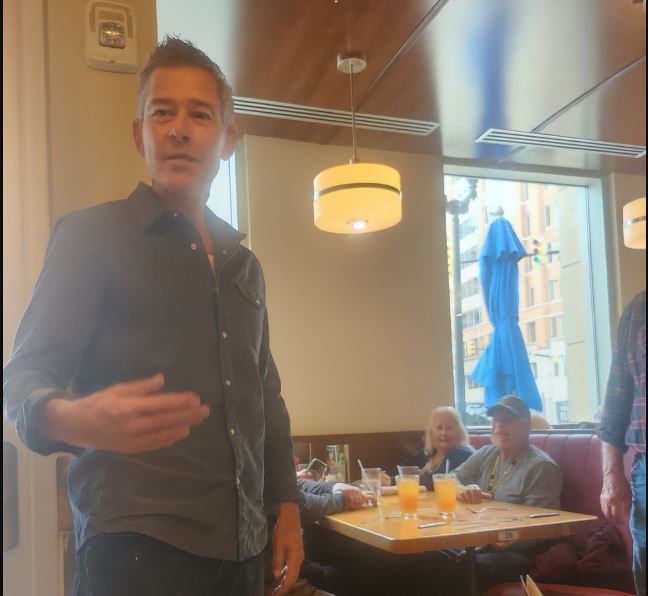
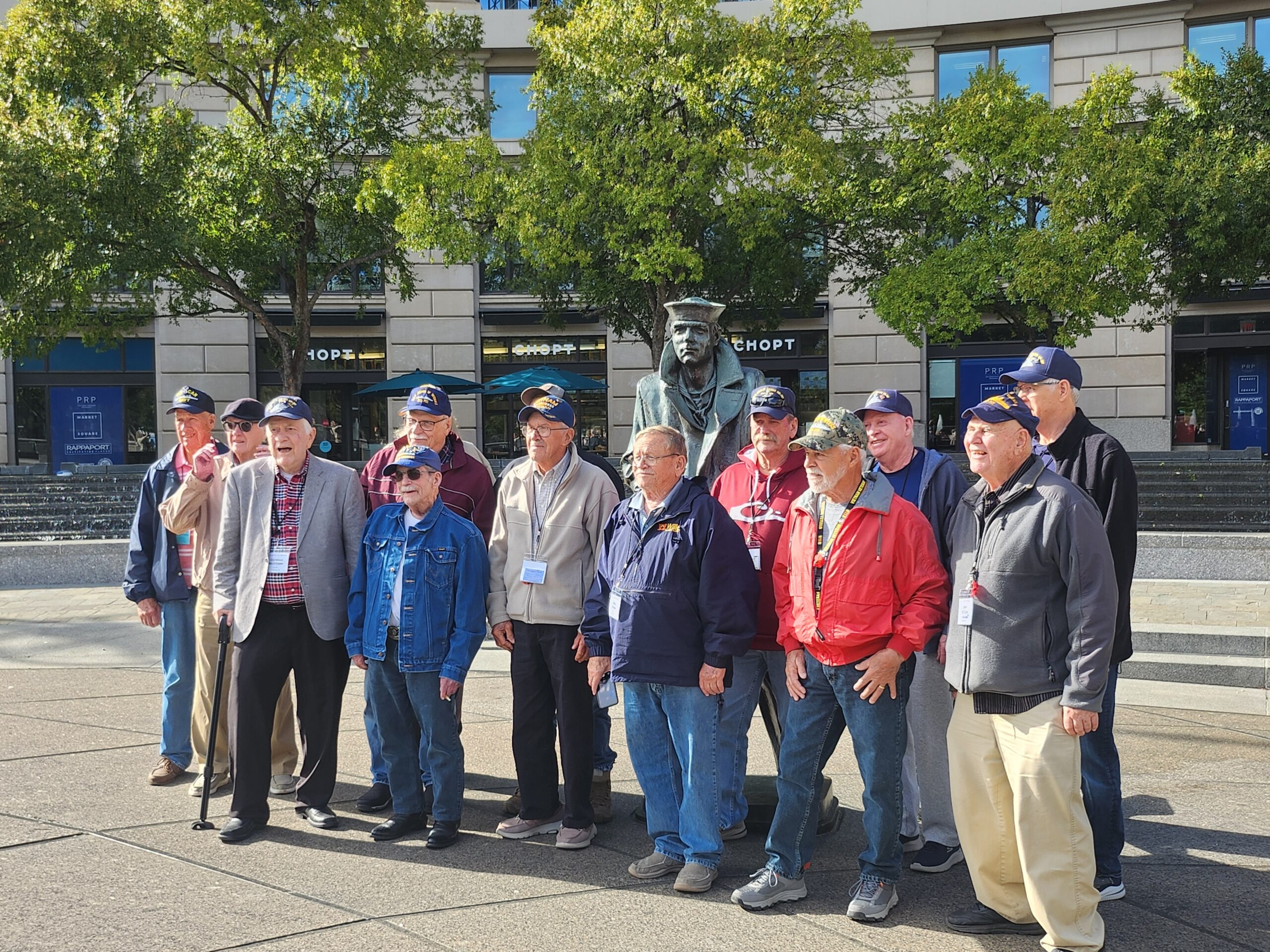
There are times when the best-laid itineraries can take an unexpected turn. I had the honor of organizing and leading a military-themed tour for a group of Vietnam-era Navy veterans who served aboard the USS John Weeks (DD 701), accompanied by their wives. We had spent the morning at Arlington National Cemetery, where the group paid their respects to fallen comrades. For lunch we stopped at the Silver Diner in Ballston.
No sooner had everyone settled into their booths than a sudden stir swept through the restaurant. A film crew entered, followed closely by Secret Service agents and the Secretary of Transportation, Scott Duffy and his wife. The atmosphere shifted from casual conversation to astonished excitement.
For the veterans, this unplanned encounter felt like a reward for their service—an unexpected brush with public life. Secretary Duffy and his wife graciously greeted the group, took photos, and fielded questions, all while cameras rolled. What was meant to be a one-hour lunch stretched to nearly an hour and forty-five minutes, as the Secretary’s team filmed segments and mingled freely among our tables disrupting the wait service.
When the couple departed, representatives from the South Carolina–based production company moved swiftly through the diner, asking everyone to sign film footage release forms. There was no clear explanation of the project, leaving many of us feeling as though we’d been drafted into a documentary without notice. The veterans didn’t seem to mind, but the delay resulted in overtime charges from the bus company and an adjustment to the rest of our schedule.
Reflection: Managing the Unexpected
Tours involving elderly guests or those with mobility challenges often require flexibility, patience, and good humor. Yesterday’s surprise encounter was a lesson in all three. In this line of work, control is often an illusion—every itinerary is vulnerable to the unpredictable. Yet sometimes, those unscripted moments are the ones guests remember most. We plan for precision, but we live—and learn—in the spaces where spontaneity takes over.
The Cost of Silence: Fear Replaces Principle in Congress
October 3, 2025
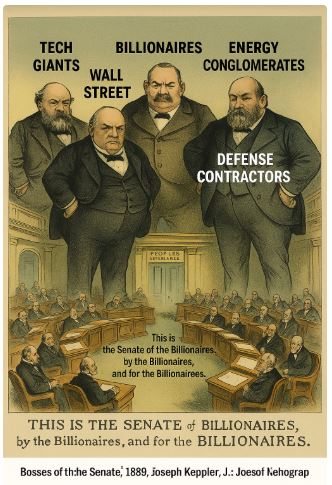
Democracy does not collapse in one dramatic instant. It corrodes slowly, almost imperceptibly, under the weight of fear, cowardice, and the silence of those entrusted with its defense.
We now find ourselves in a political moment where the nation’s elected representatives appear unwilling to confront executive overreach. The president has clamped down on dissent, punished those who speak out, and wielded reprisals as tools of governance. The effect is chilling: a Congress that once claimed to be a coequal branch of government now quivers in submission, unwilling to test its constitutional strength.
This dynamic carries profound consequences. A president unchecked by Congress is not simply a strong leader; he is, by definition, a figure operating outside the balance of powers. When the legislative branch surrenders to intimidation, the system designed by the framers falters. Citizens lose the assurance that their representatives will protect liberty rather than preserve their own political survival.
Fear of reprisal, amplified by the threat of violence from extremist elements, has paralyzed many legislators. They calculate that challenging the president may end their careers or invite retaliation against their families. This calculation, repeated across both chambers, produces a self-reinforcing cycle of silence. Tyranny thrives not because one man demands it, but because many others refuse to resist it.
The implications extend beyond the next four years. If Congress cannot summon the will to confront abuses of power now, it establishes a precedent that will outlast the current administration. A president emboldened by legislative timidity will not simply consolidate authority; he may also attempt to stretch his tenure beyond constitutional limits, citing loyalty from a pliant Congress as justification. In such a climate, even the once-iron rule of two terms could come under assault.
The danger is not only the erosion of free speech, but the normalization of fear as a governing principle. Citizens who see their leaders punished for dissent will learn to silence themselves. Public debate withers. Institutions meant to check power bend until they break. What remains is not a republic of laws, but a republic of submission.
History judges harshly those who remain silent in the face of encroaching tyranny. It remembers the senators who stood aside, the representatives who bit their tongues, the judges who declined to act. It also remembers, with reverence, those few who chose principle over fear.
The coming years will reveal which side of history today’s leaders have chosen. But one thing is already clear: the cost of silence will not be measured in careers lost, but in freedoms surrendered.